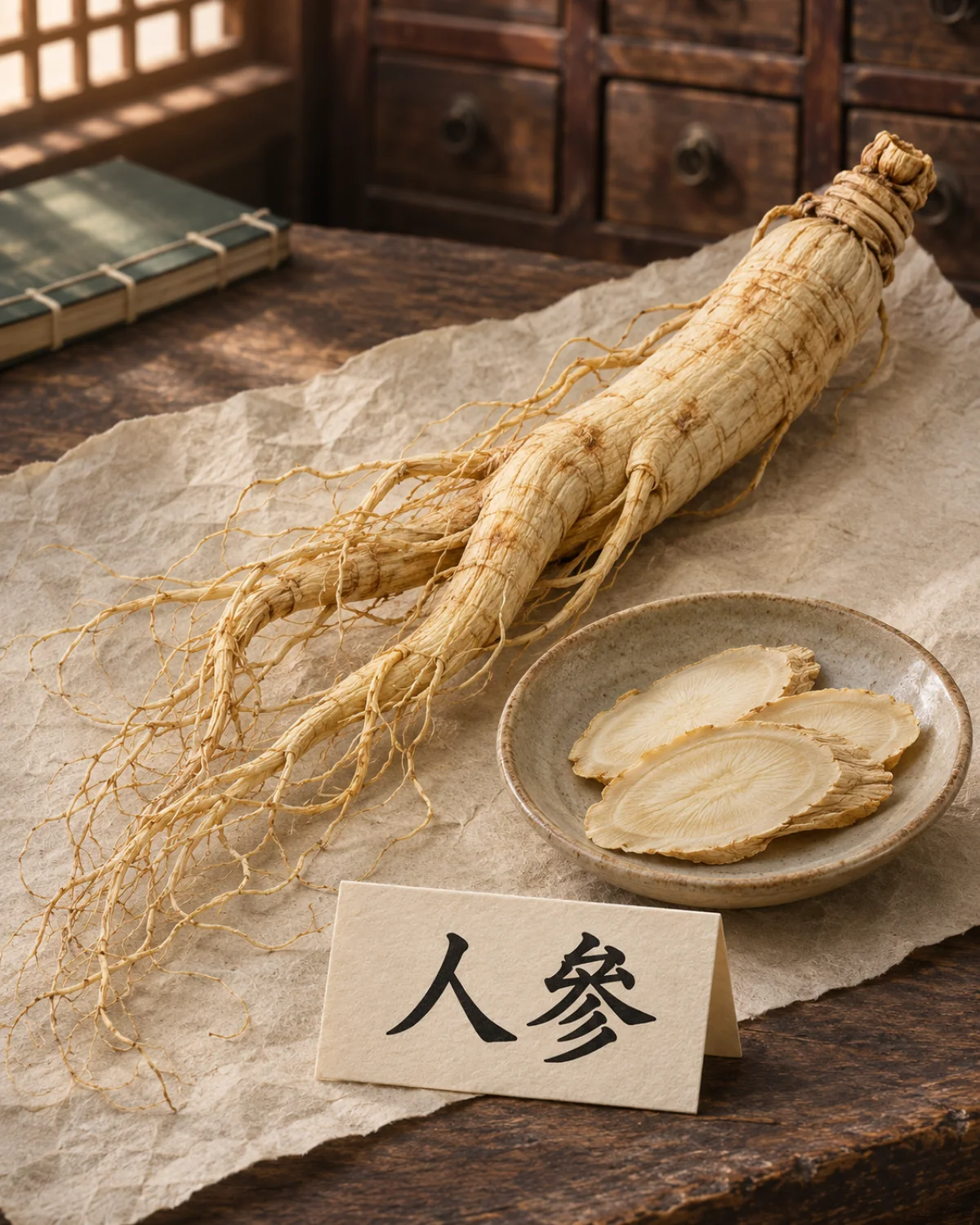
 ↗HERBARIUM · Panax ginseng C.A.Mey.
Roots & rhizomes01
Explore ginseng through its main root and fine rootlets, its association with the human form, and the preparation names red and white ginseng. Learn how traditional qi theory differs from modern research on ginsenosides.
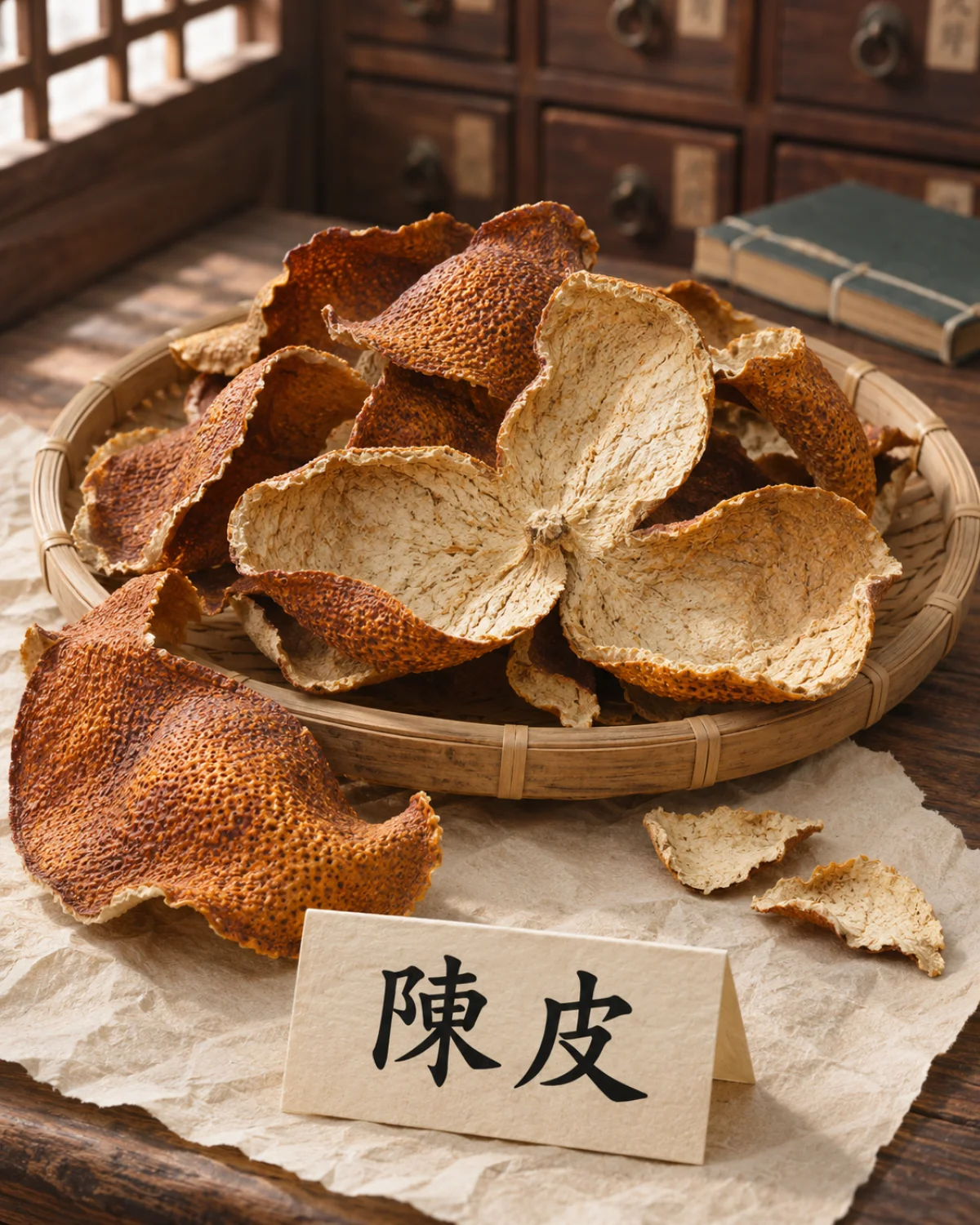 ↗HERBARIUM · Citrus reticulata Blanco
Flowers & fruits02
Examine the oil cavities, inner fibres and mature peel that define Chenpi. Follow the meaning of its name, associated with ageing, while distinguishing storage records, sensory impressions, constituent analysis and the evidence needed to assess quality.
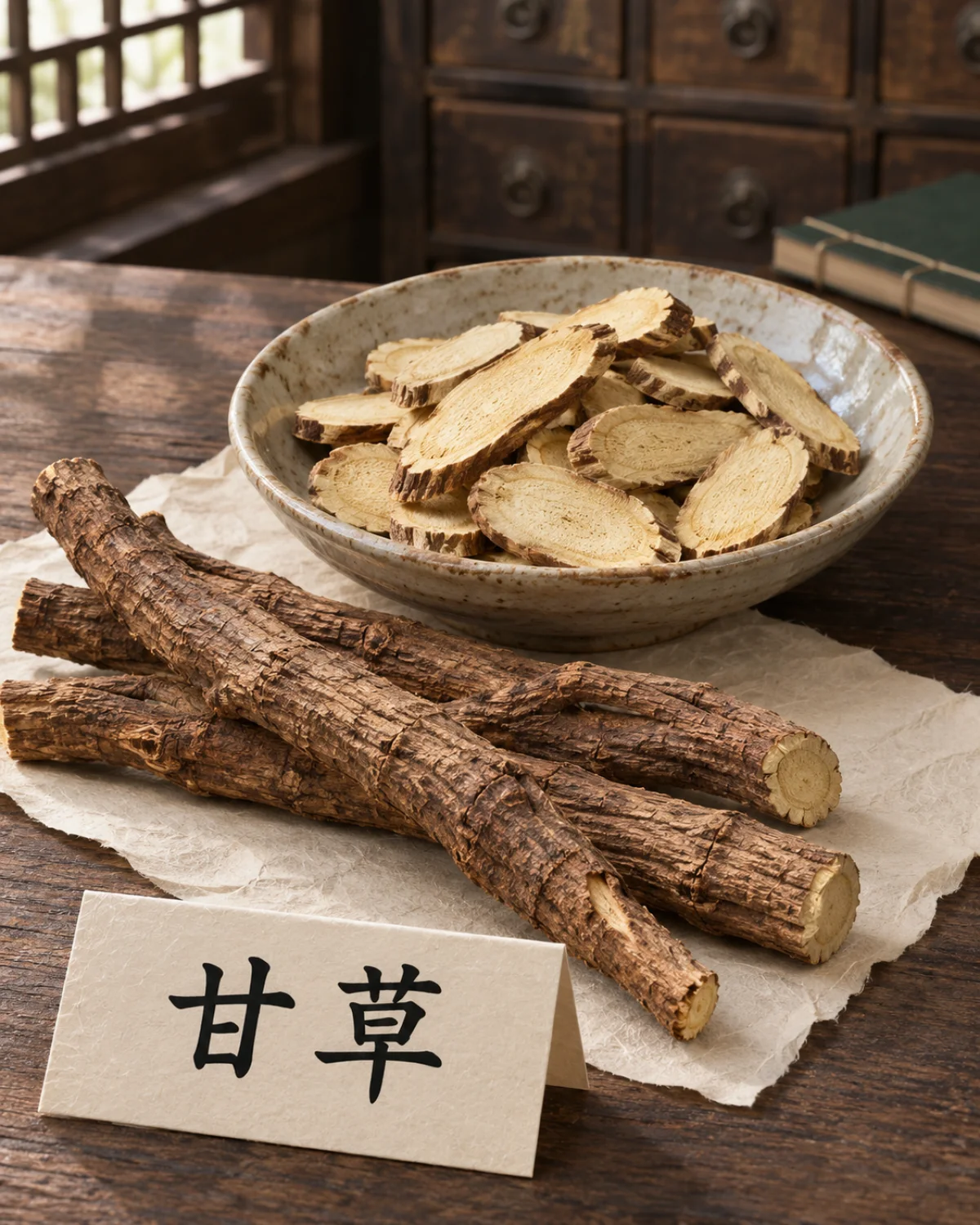 ↗HERBARIUM · Glycyrrhiza uralensis Fisch. et al.
Roots & rhizomes03
Look beyond sweetness to licorice roots and rhizomes, the chrysanthemum-heart pattern of a cut surface, and preparation names. Explore traditional ideas of harmonising within formulas alongside the safety information associated with glycyrrhizic acid.
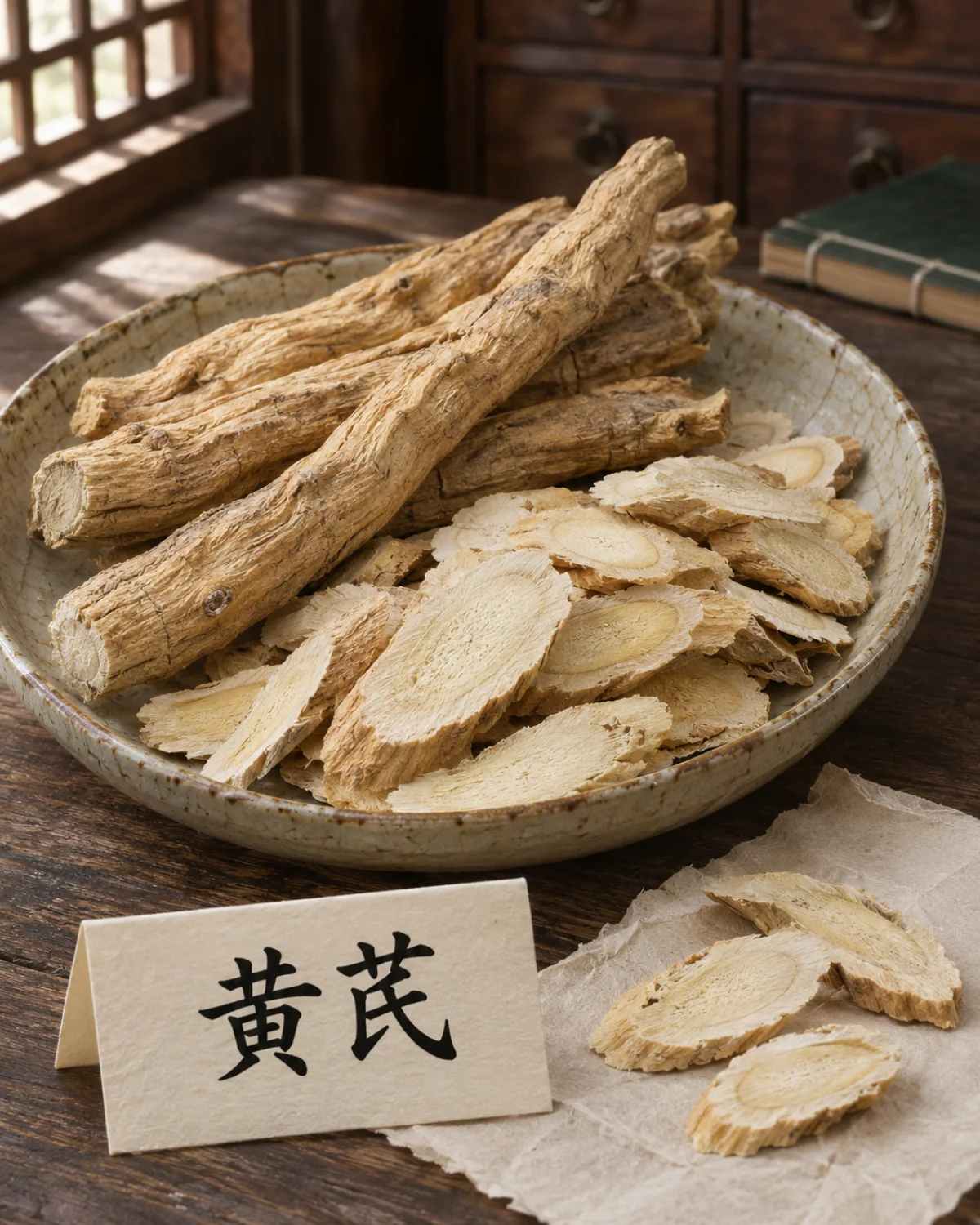 ↗HERBARIUM · Astragalus membranaceus / A. mongholicus
Roots & rhizomes04
Compare the written names 黃芪 and 黃耆, then examine the contrasting colours of an Astragalus root slice and the meaning of honey-processing names. Read traditional qi theory, material preparation and modern research in their respective contexts.
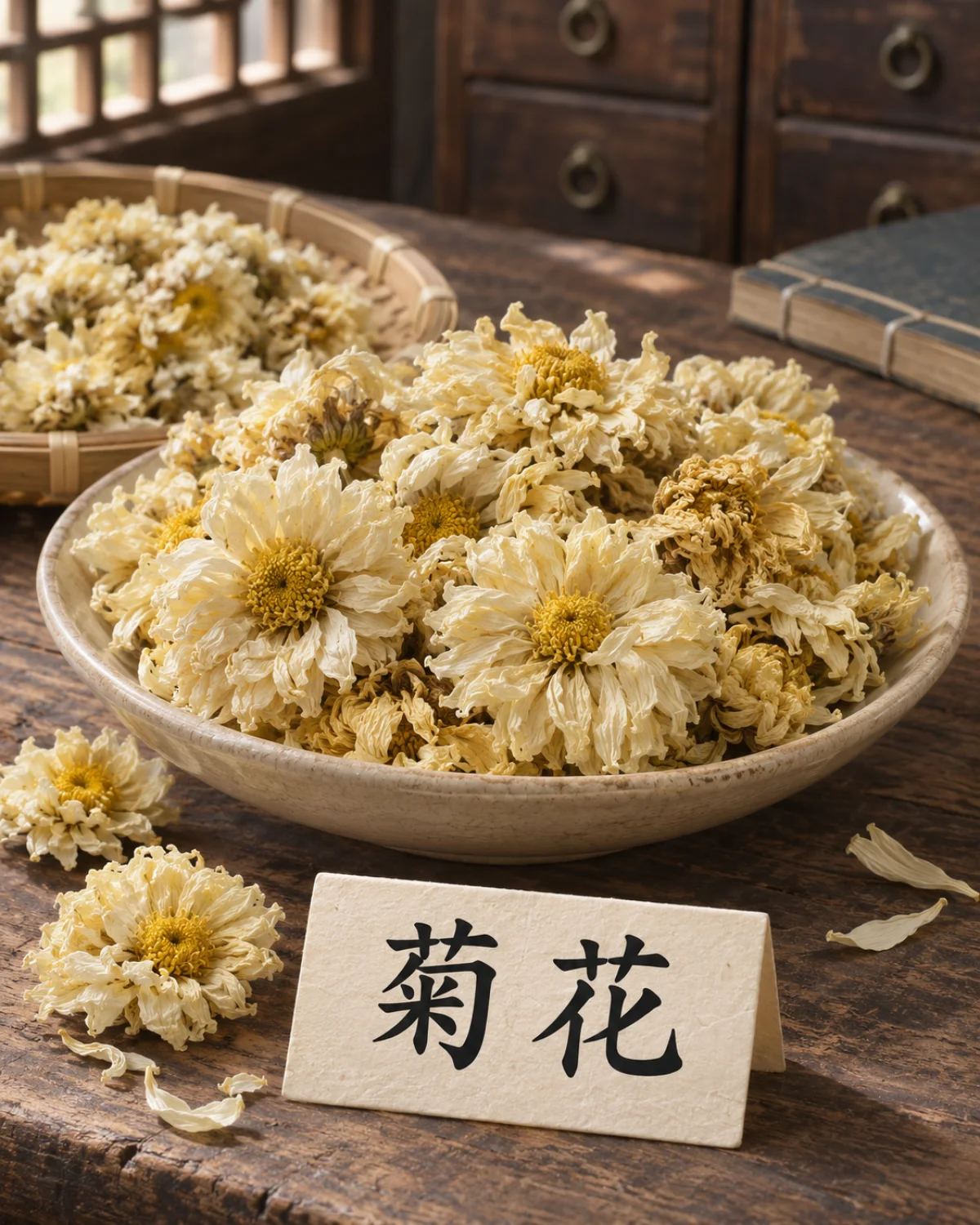 ↗HERBARIUM · Chrysanthemum morifolium Ramat.
Flowers & fruits05
Explore the flower head behind a familiar bloom: outer ray florets, central disc florets and surrounding bracts. Compare names such as Hangju and Boju, then distinguish chrysanthemum culture, medicinal-material descriptions and research on constituents.
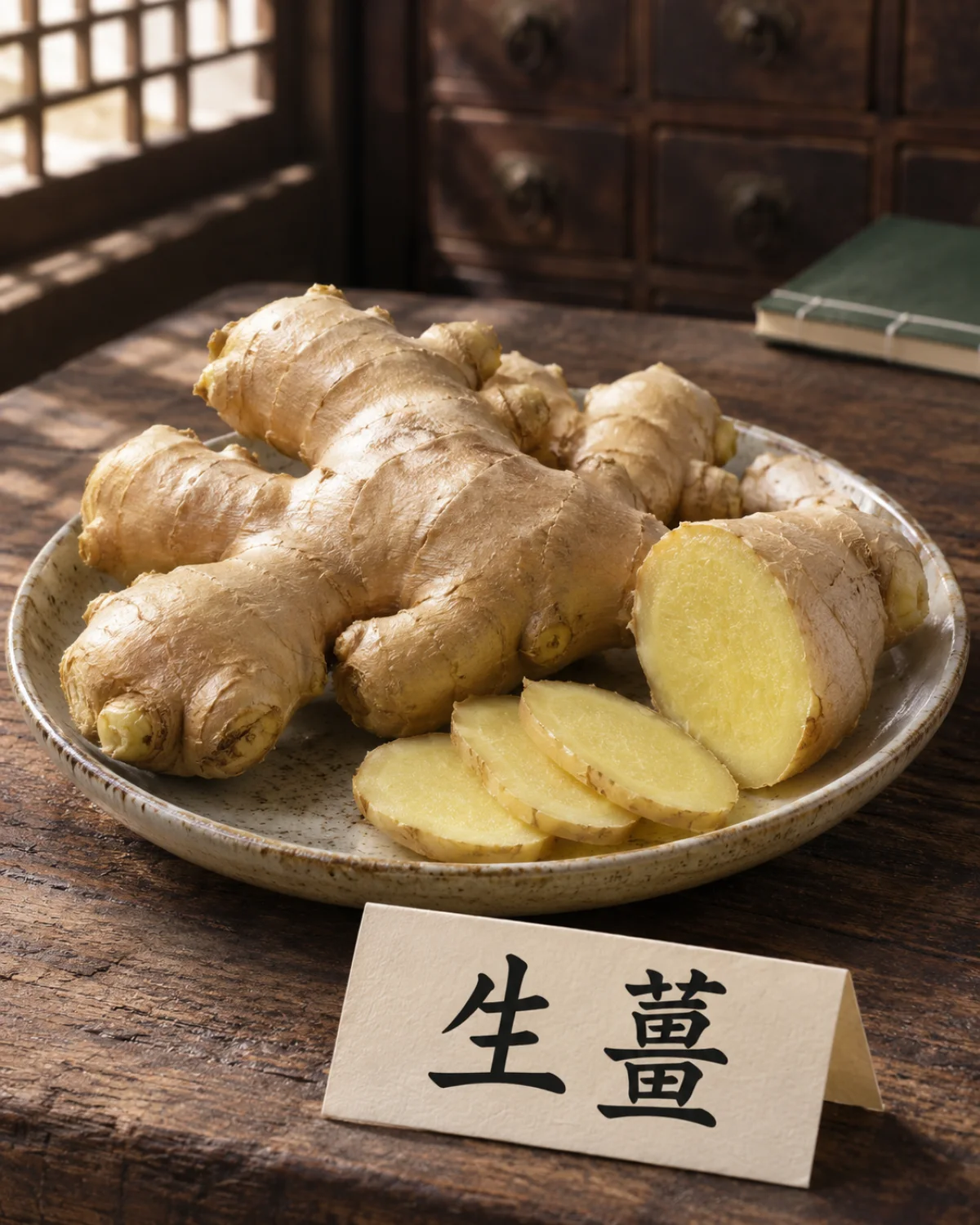 ↗HERBARIUM · Zingiber officinale Roscoe
Roots & rhizomes06
Examine fresh ginger as an underground stem, tracing its branches, nodes and cut surfaces. Compare fresh, dried and processed ginger names, then distinguish culinary experience from constituent analysis and the supplement forms often used in research.
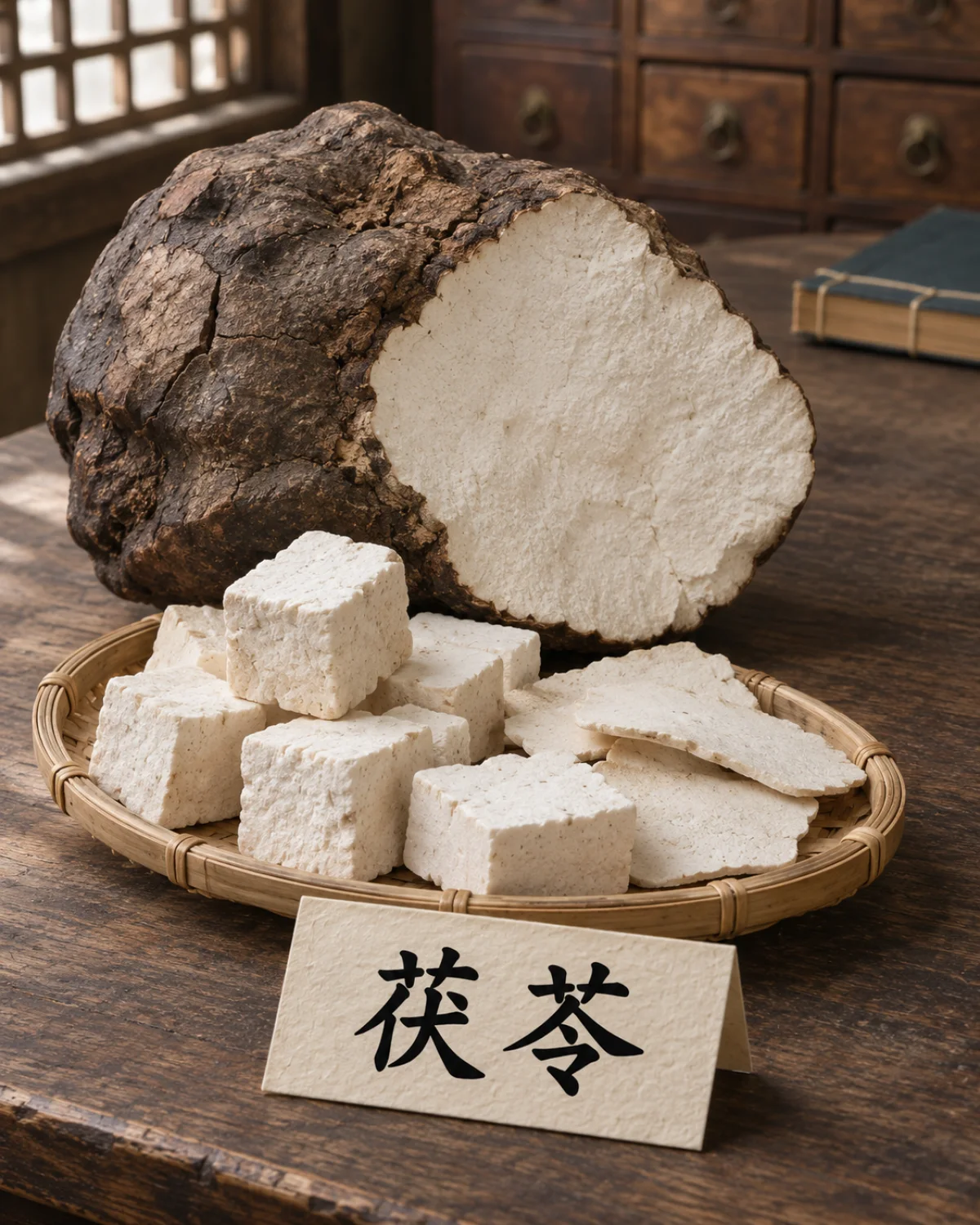 ↗HERBARIUM · Poria
Fungi & algae38
Poria is often imagined as transformed pine root, but it is the dried sclerotium of a polypore fungus. This reading distinguishes the sclerotium from pine roots, examines specifications such as Poria peel, red Poria, white Poria, and Fushen wood, and sets a careful frame for textual and contemporary understanding.
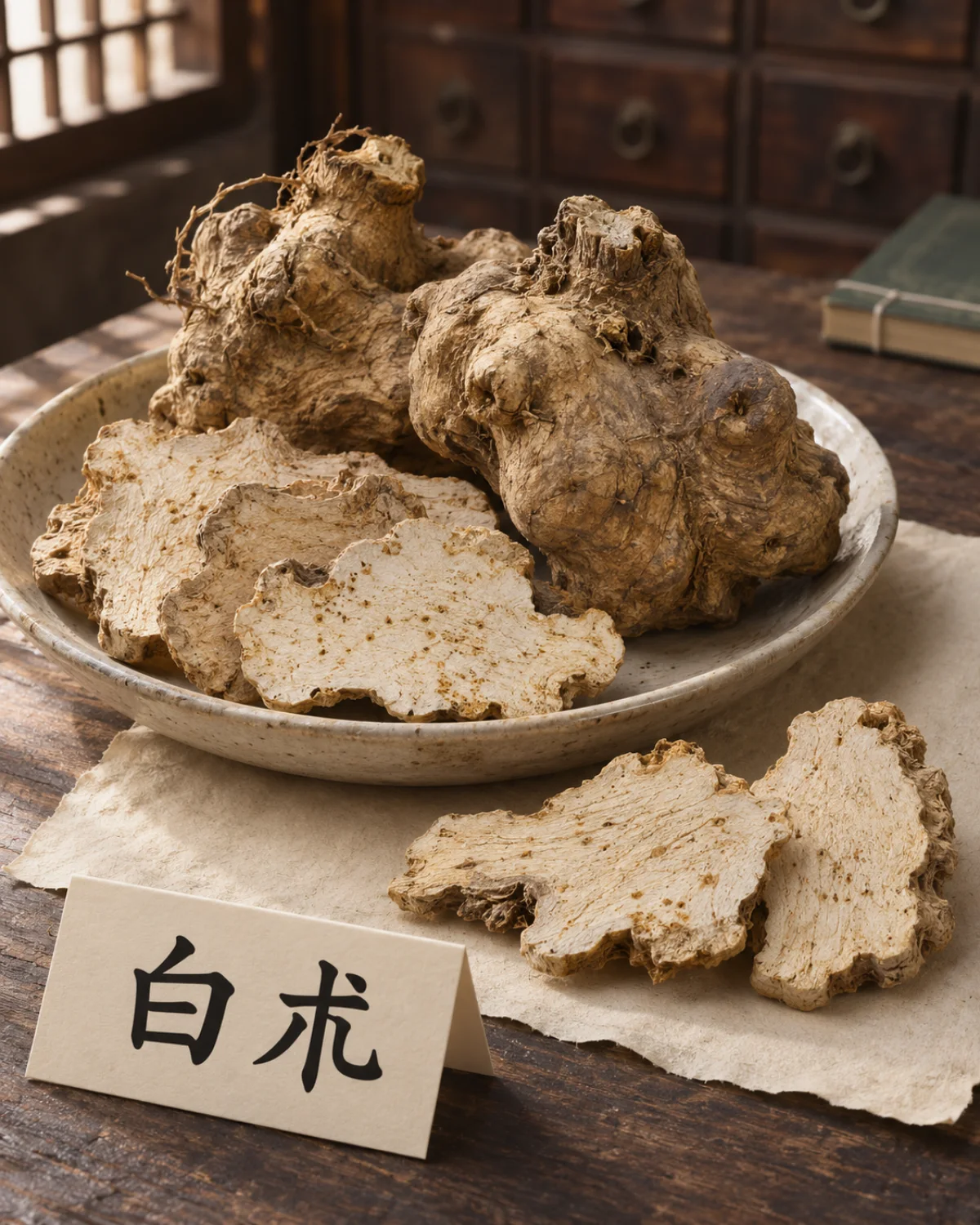 ↗HERBARIUM · Atractylodis Macrocephalae Rhizoma
Roots & rhizomes39
From rhizome morphology and macroscopic features to the standard name, this article explains why the single character 'zhu' cannot accurately identify Baizhu and calls for comparison between texts and specimens.
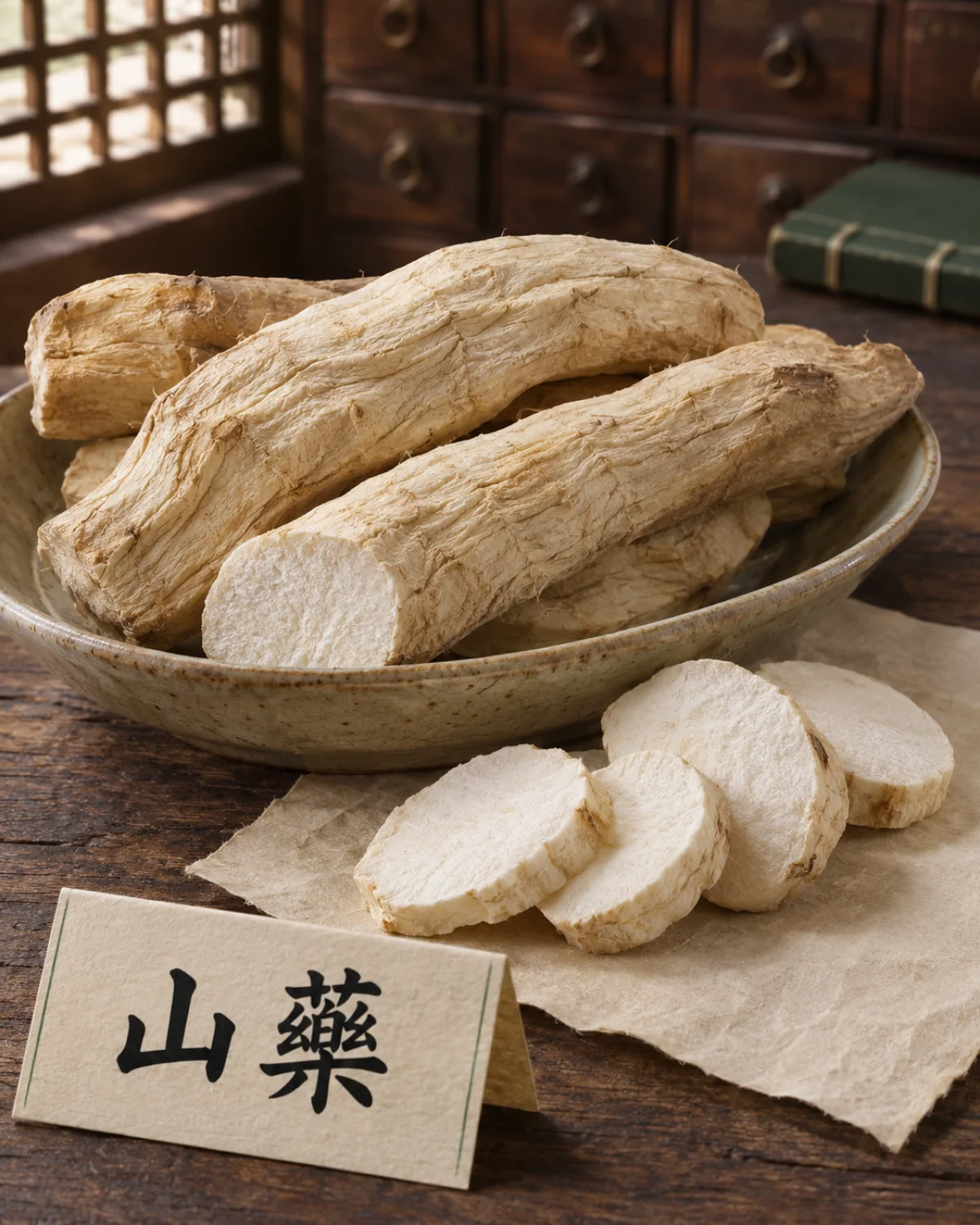 ↗HERBARIUM · Dioscoreae Rhizoma
Roots & rhizomes40
Tracing shanyao from name and specification to textual records, this reading explores how it moves between daily food and medicinal material, and offers a method for close reading of reference record.
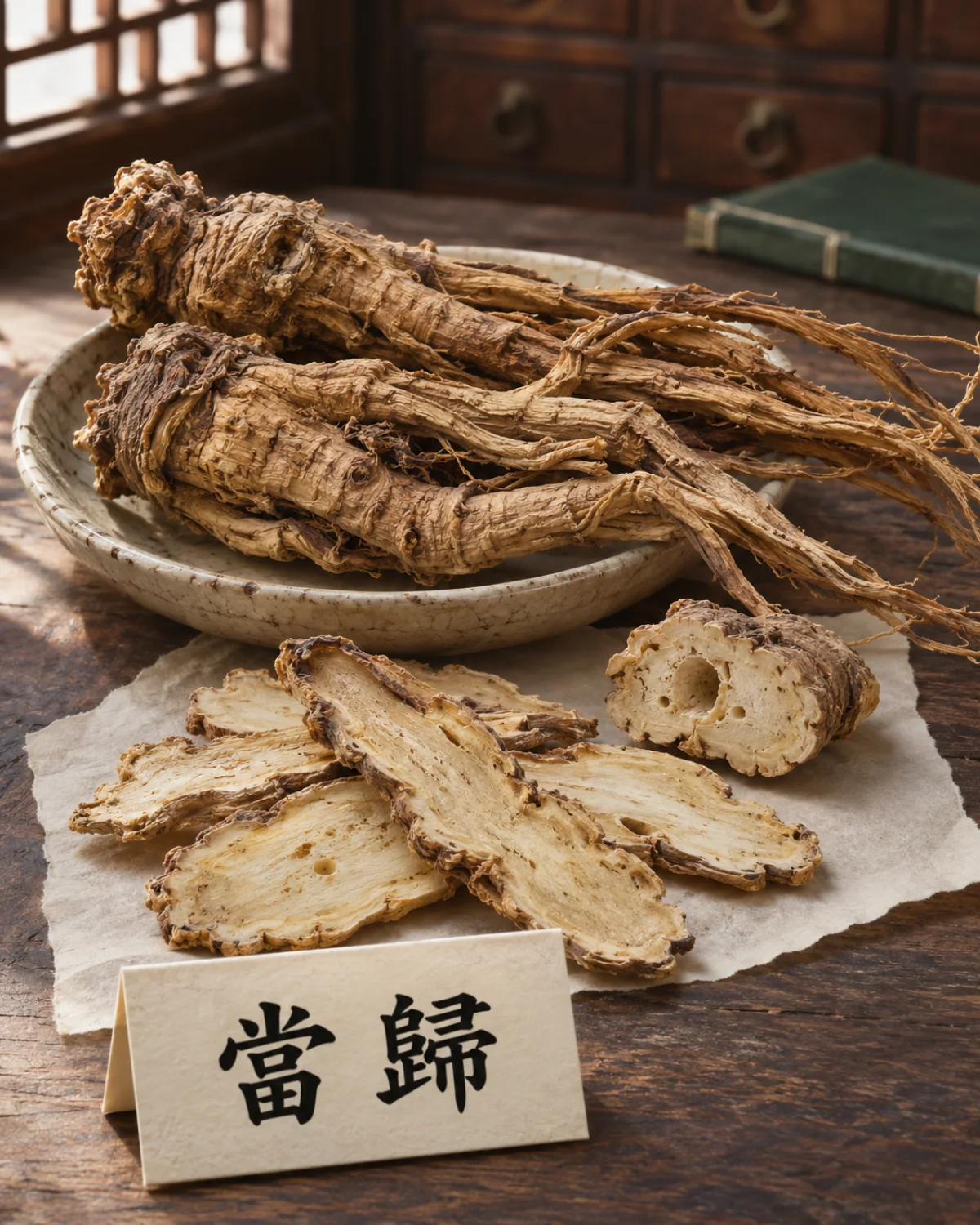 ↗HERBARIUM · Angelicae Sinensis Radix
Roots & rhizomes41
Starting from the morphology of the dried root and its branches, this reading distinguishes guitou, guishen, and guiwei, then examines the name and literature without literalist legends.
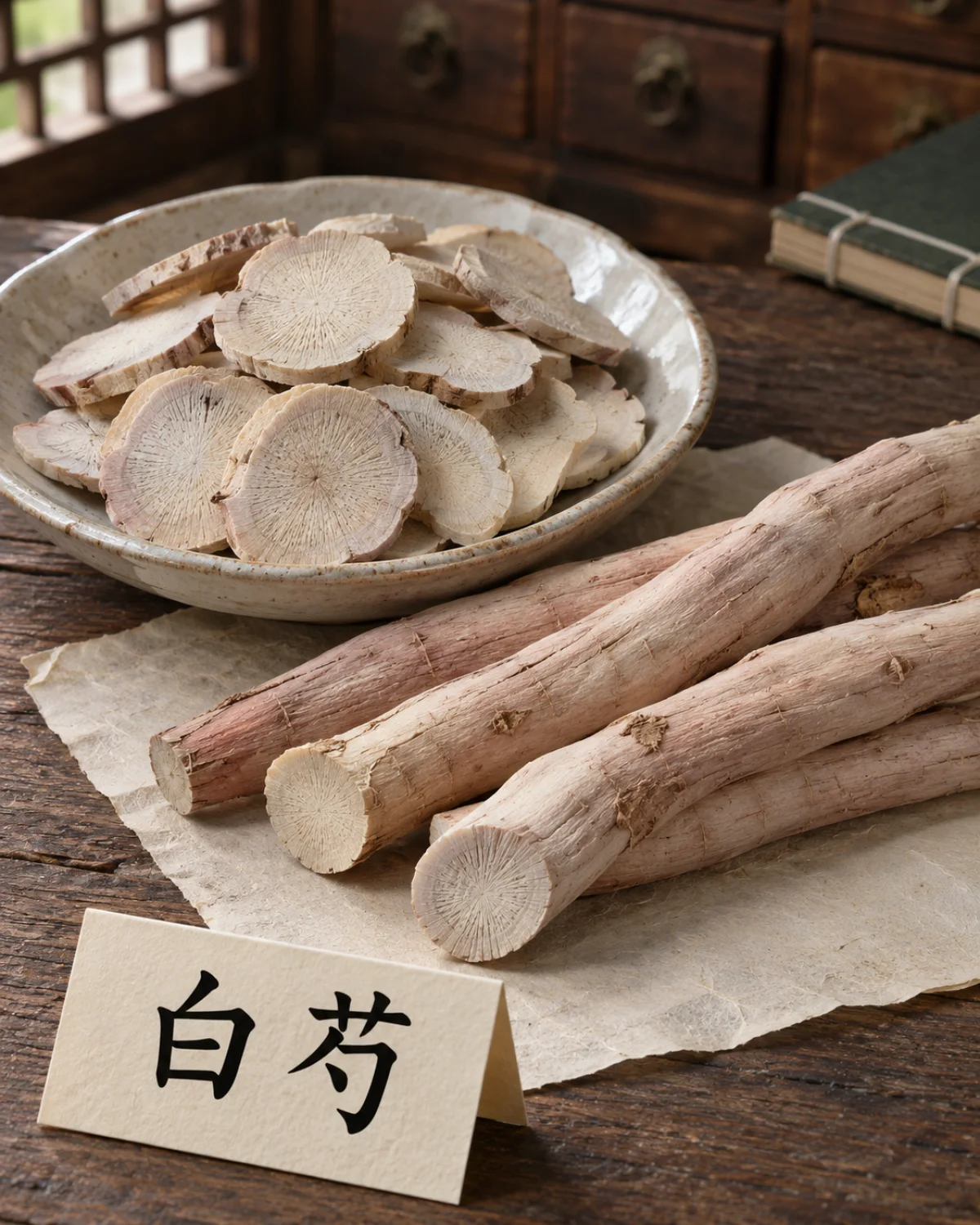 ↗HERBARIUM · Paeoniae Radix Alba
Roots & rhizomes42
White Peony Root is named for its pale appearance, yet its actual features invite layered identification. This essay examines the herb through its botanical source, morphology, textual records, and contemporary understanding.
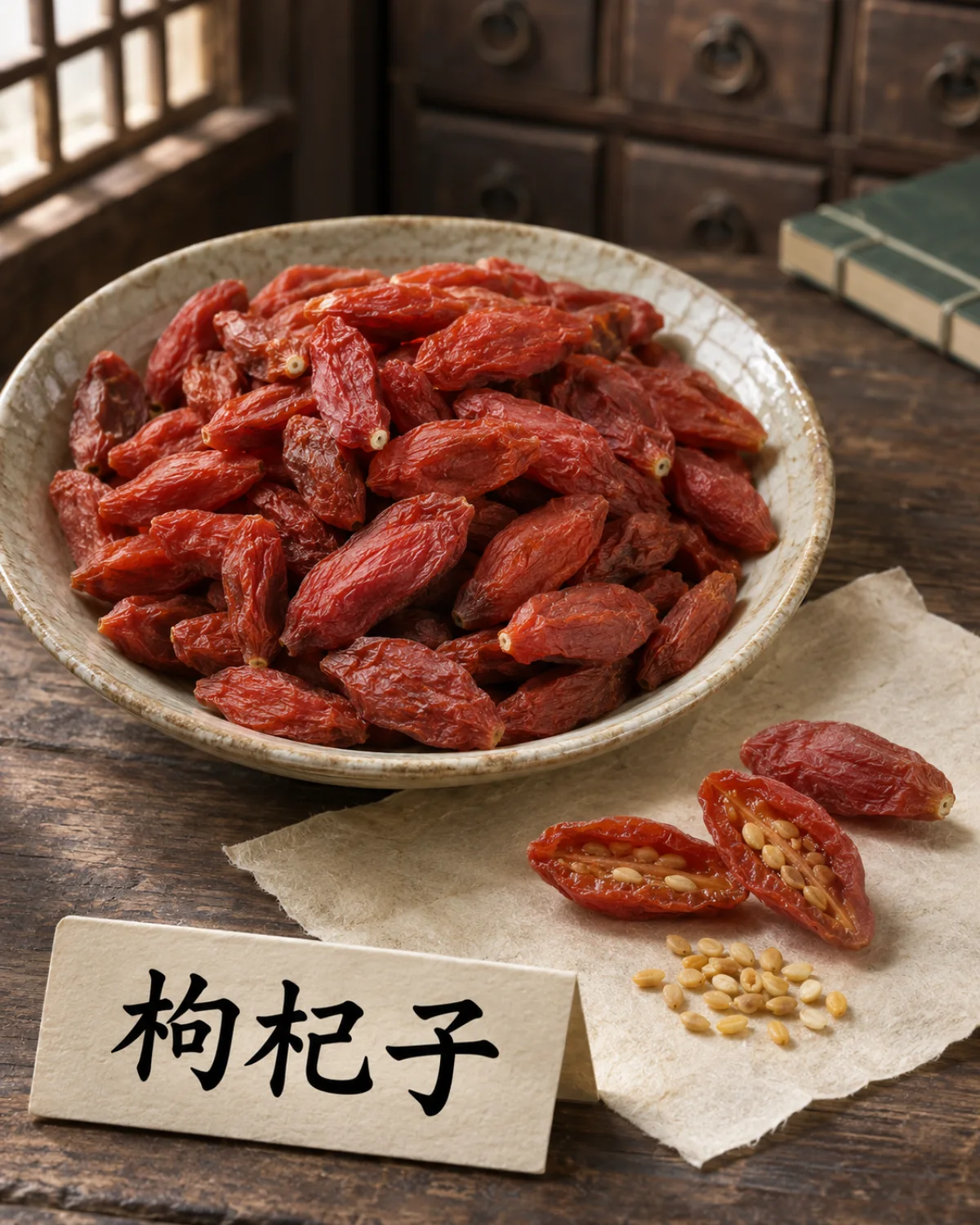 ↗HERBARIUM · Lycii Fructus
Fruits & seeds43
Goji berry is used as the dried ripe fruit of Lycium barbarum. This reading separates the plant from its medicinal part, and examines origin, macroscopic features, textual records and contemporary understanding.
