
THE FORMULA JOURNAL NO. 009
Reading between legend and record
Follow the legend of Shennong and Li Shizhen's Bencao Gangmu to distinguish cultural stories, historical works and surviving editions. Library records and botanical images offer practical ways to connect respect for tradition with careful reading.
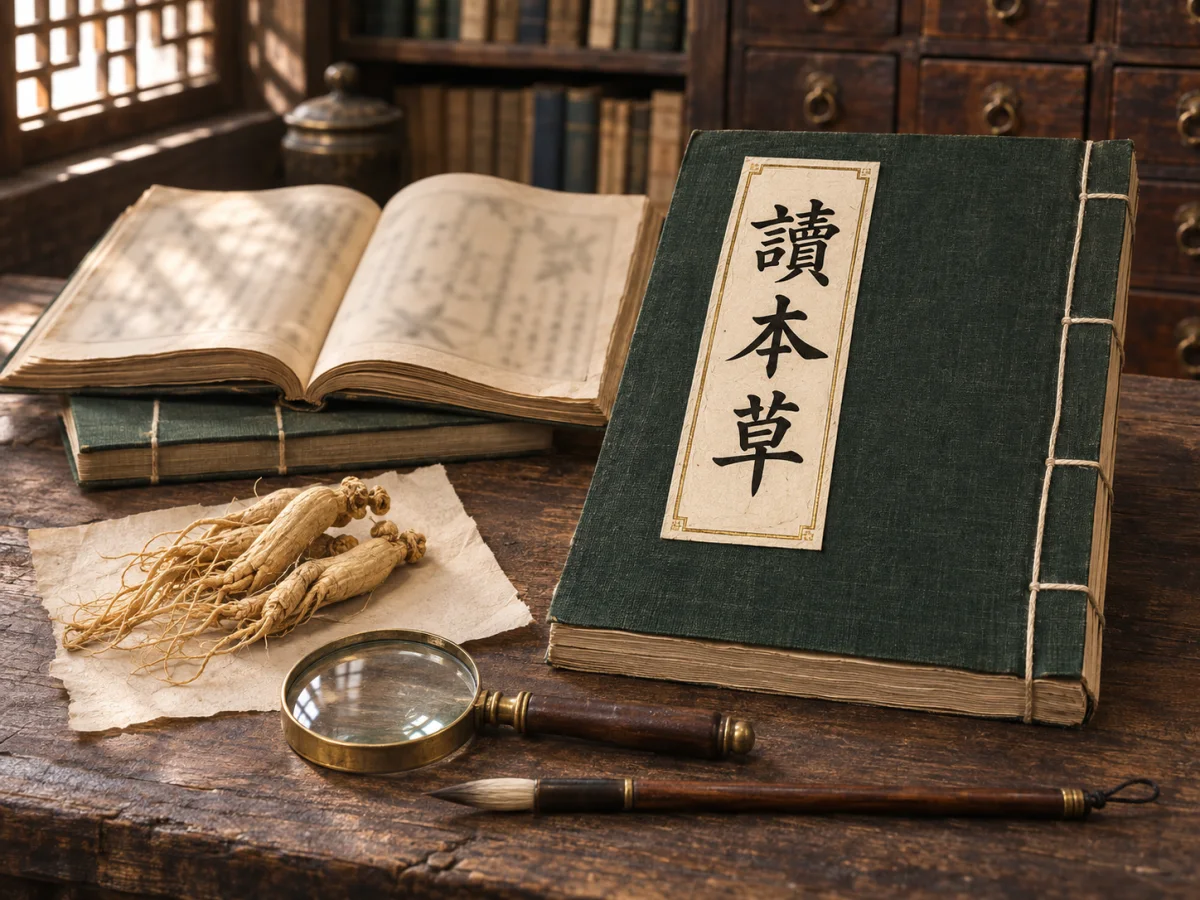
CHAPTER 01
Legend keeps respect; the page takes up the question
At the level of texts, one must look separately at book titles, entries, and transmission records. The figure in the legend and the way an ancient book was compiled, copied, and printed are different objects of reading. Giving each its place does not diminish the power of the story; rather, beyond respect, it allows one to keep asking how a drug name, an image, or a passage of text has come down to the present.
CHAPTER 02
Li Shizhen and the Bencao gangmu: organizing knowledge into a book
Reading bencao is therefore not only a search for conclusions about a particular material; it is also an observation of how knowledge is arranged. The text, images, and classifications in the book let readers see the shape of editorial work; later copying, printing, and reading allow the same work to continue circulating. This cumulative perspective conveys the patience required for seeking and preserving knowledge better than adding unverified herb-gathering adventures to a figure.
CHAPTER 03
The same book meets different dates
Taking the relevant Library of Congress holding page as an example, the date field is marked 1871. This year provides a time coordinate for the holding record before us and cannot be taken directly as the date of composition or first printing of the entire work. Reading the title, date field, and cataloguing notes together is a practical form of edition reading: it acknowledges that each transmitted material has its own provenance and record context.
CHAPTER 04
Beyond image and name, add a thread of material
Further verification must also connect to modern botanical origin, medicinal parts, and the corresponding medicinal material standards. Notes can record the book title, entry location, edition consulted, image observations, and source links, so that each understanding has somewhere to be traced. This way of reading accommodates both cultural stories and careful discrimination; the classical wisdom in the library is unfolded anew in each concrete comparison.
THE LINEAGE
Sources & transmission
1518–1593
The life of Li Shizhen, traceable through the listed biography.
1596
The Bencao Gangmu appeared in print after his death.
1871
The date of the Library of Congress edition, not the first printing of the work.
THE ART OF PREPARATION
A process, illustrated
An educational workflow. Images are conceptual, not records of Chap Ku Fong facilities or completed product development.
Read the sources
First record the book title, entry location, and edition consulted, then distinguish legend, original text, and later interpretation. These simple records give the later image observations and drug-name comparisons a basis, and make the corresponding pages findable on rereading.
Identify the materials
Arrange ancient drug names, what is seen in images, modern botanical origin, and parts used in separate columns. Images prompt observation, while text and medicinal material standards provide different clues; only by comparing them can one avoid deciding a material's identity from a single picture.
Study preparation
When encountering terms of preparation or dosage form, first note their location and context in the original entry, and observe whether they describe the material, its form, or a record of use. Preserving the original context is more helpful for understanding than hastily converting it into familiar modern operational terms.
Document & review
Record holding dates, preface dates, and printing clues separately, and keep source links as well. Leave one's own questions and judgments in the notes as well, so that verifiable text and personal understanding each have their place, and later revisions will not confuse them.
INGREDIENTS
Constituents & parts
HISTORY
Origins & stories
SAFETY
Reading & safety notes
THE READING ROOM
References
- 香港浸會大學 — 中藥方劑圖像數據庫 / HKBU Chinese Medicine Formulae Images Database ↗
- 香港教育局 · Li Shizhen biography / timeline ↗
- Library of Congress · Bencao Gangmu, 1871 edition ↗
Herbal reading-room scene; not a historical artifact, identification plate or record of brand manufacturing.
Editorial update · 2026-11-16
ANOTHER CHAPTER AWAITS
Continue exploring
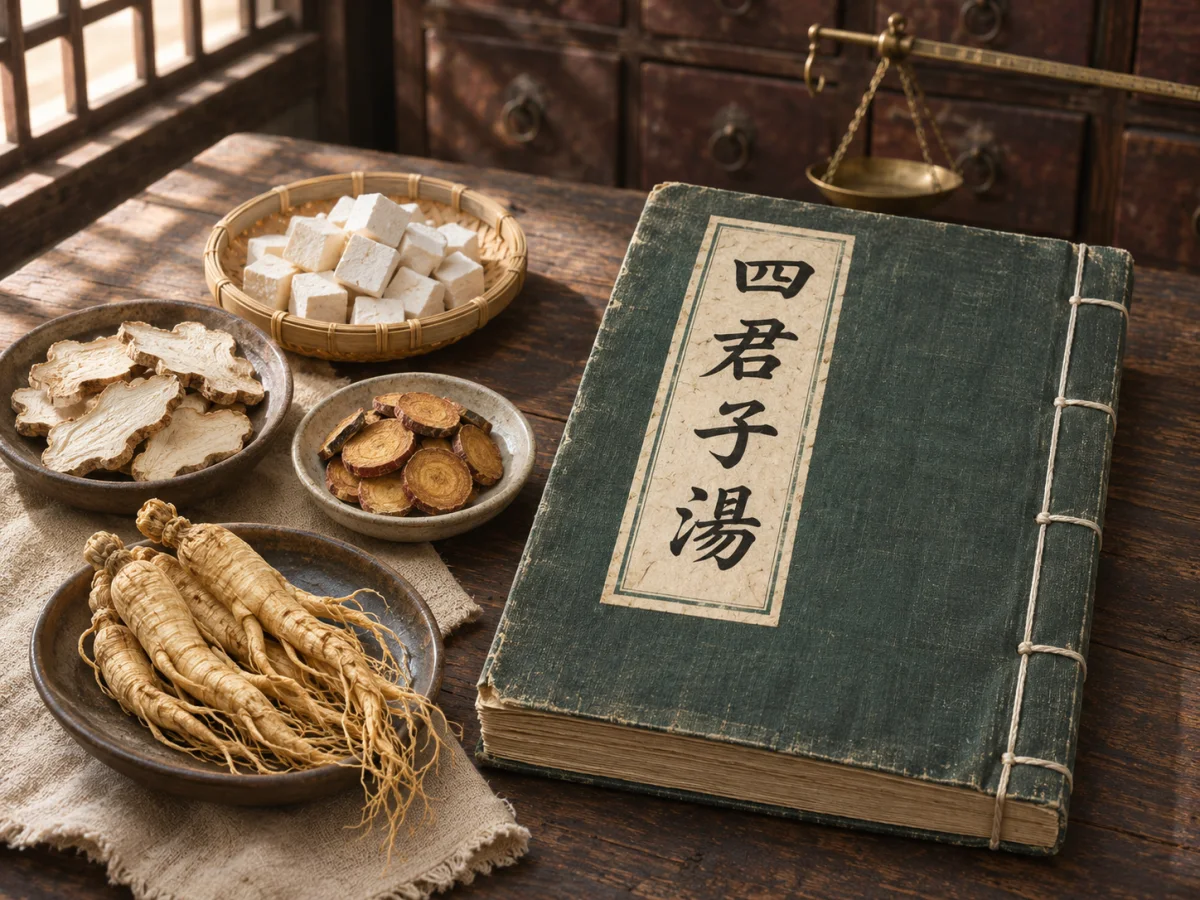
Si Jun Zi Tang: the art of combination
Explore Si Jun Zi Tang through its source, four materials and traditional ingredient roles. Distinguish the formula name from its recorded preparation forms, then compare the additional materials in Liu Jun Zi Tang.
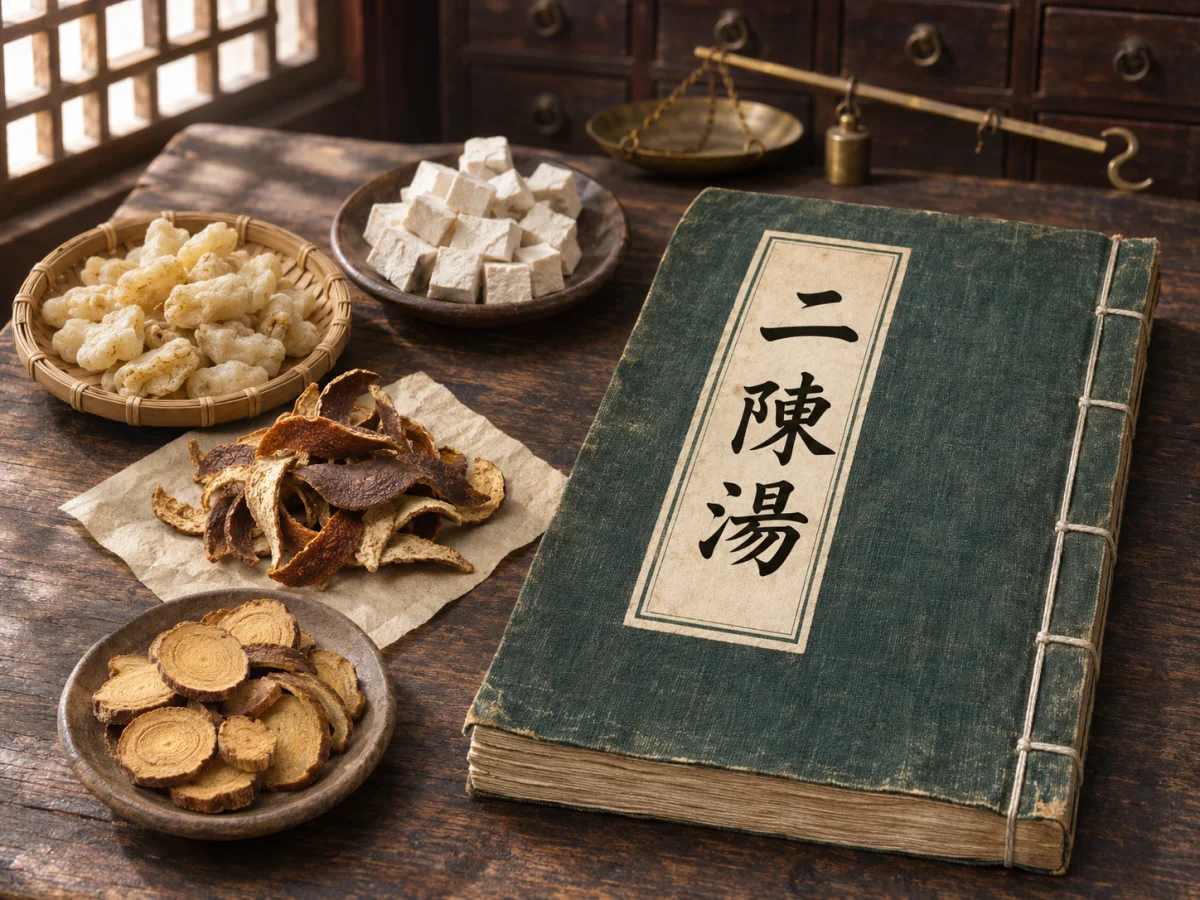
Er Chen Tang: a name, a preparation, a history
Read Er Chen Tang through its four principal herbs and separately recorded ginger and dark plum. Explore how precise material names, storage, processing and traditional formula theory give this familiar name greater depth.
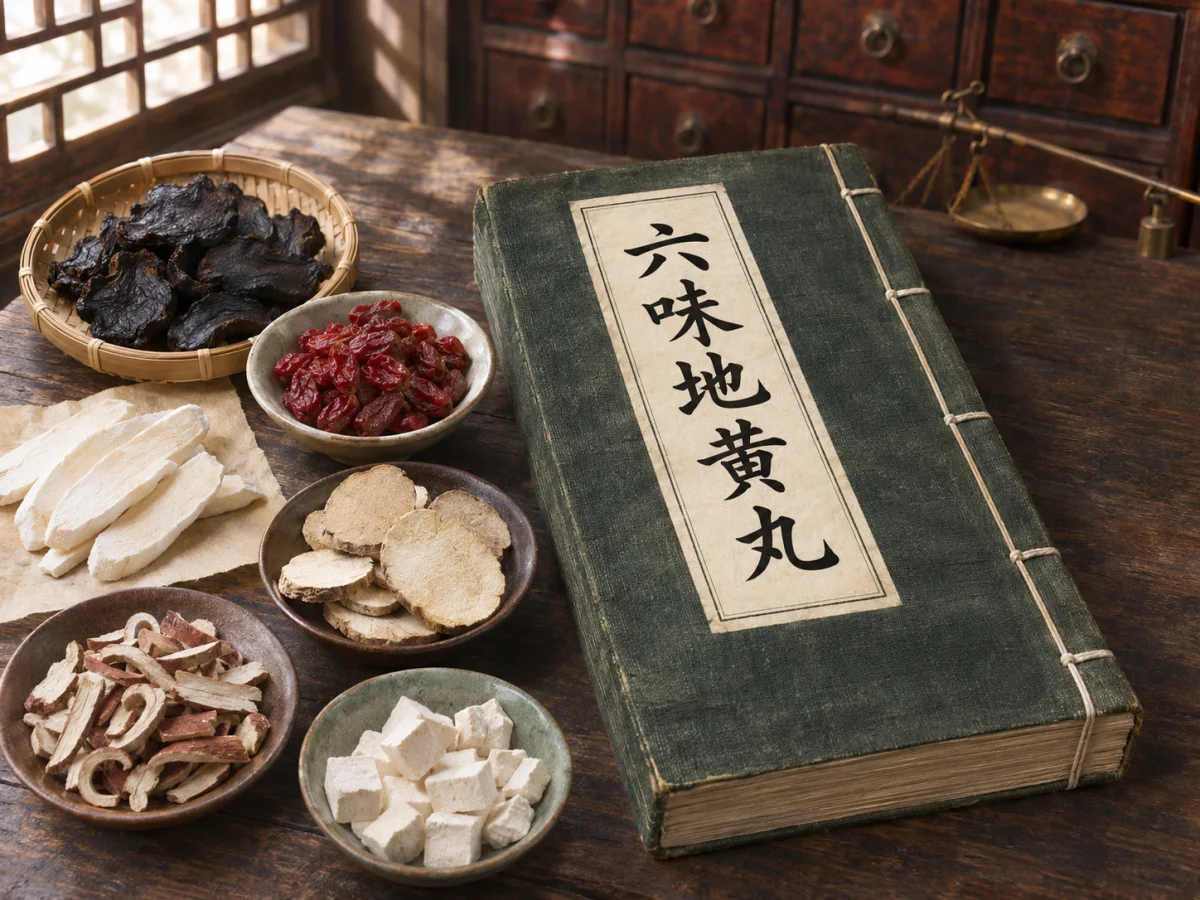
Liu Wei Di Huang Wan: reading the six-part formula
Trace Liu Wei Di Huang Wan to its cited source, then examine the six materials, traditional three-tonifying and three-draining structure, and the distinction between processing names, pill form and the recorded use of honey.