
THE FORMULA JOURNAL NO. 008
The craft of preparation
From cleaning and cutting to specialist processing, discover how names such as Sheng Dihuang and Shu Dihuang describe different material identities, and how work areas and records connect herbal craftsmanship with traceability.
CHAPTER 01
The work begins with knowing the material
The Chinese Medicine Pharmacists Association places processing within the context of Chinese medicine theory, material properties and the needs of dispensing and formulation. This means processing is not a fixed set of actions applied to every raw material. Only when name, origin and part correspond to one another do the later procedures have a basis. The Hong Kong Chinese Materia Medica Standards establish quality references for individual materials, offering another entry point for this material-by-material reading.
CHAPTER 02
Cleaning, cutting and processing each have their place
In the language of professional management, these distinctions also appear in spatial arrangements. The GMP questions and answers of the Hong Kong Chinese Medicine Regulatory Office discuss cleaning and selection, steaming, stir-frying, adjunct processing and calcining, and screening, cutting and pulverising as separate procedures, linking them to reducing mix-ups, errors and cross-contamination. Understanding this division of procedures makes clear why processing involves both material knowledge and work order.
CHAPTER 03
Raw, prepared and processed forms: more than an extra character
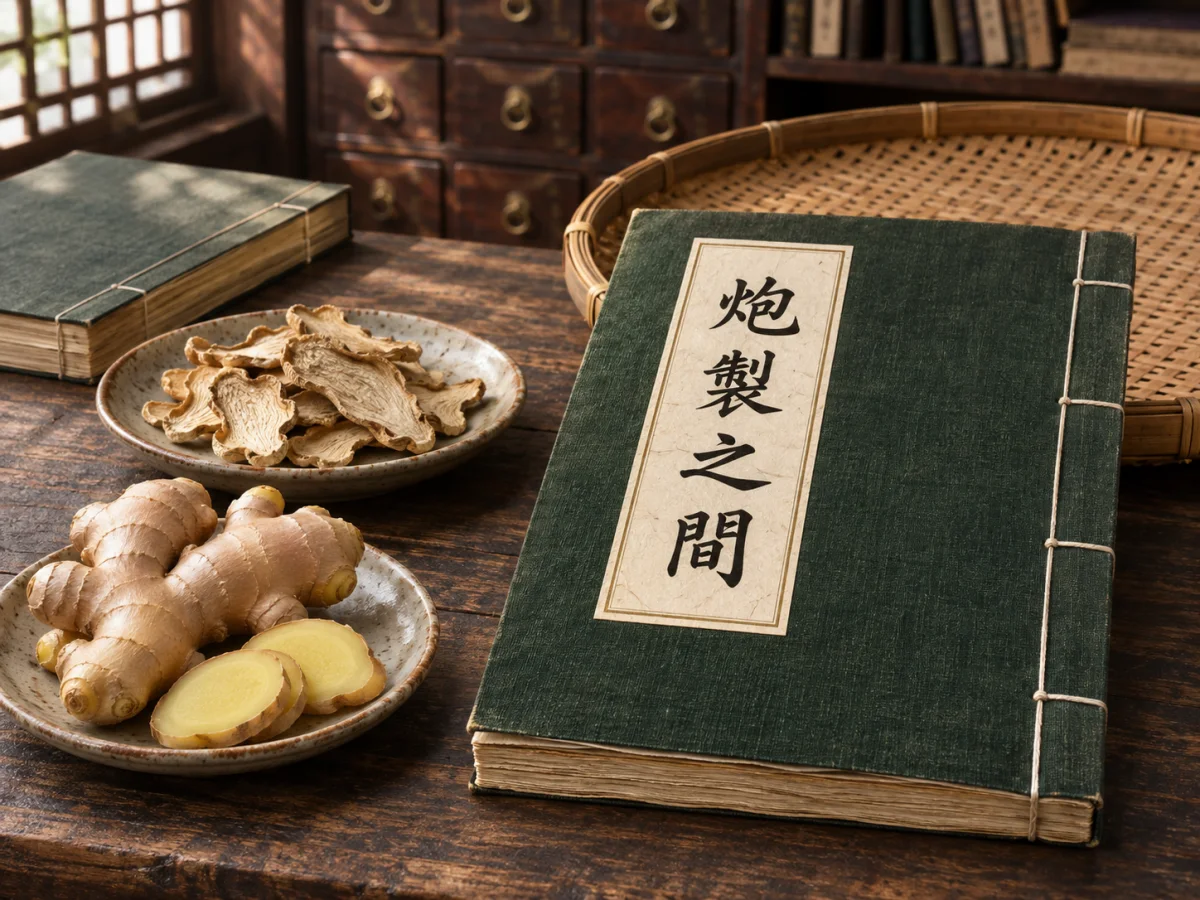
When reading classical formulas, the same eye can be turned to terms such as "honey-fried Licorice" (Zhi Gancao). Clarifying first what the original text says, then understanding its place in the formula, is more substantive than simply merging similar names. Images can show form and texture, while names and processing records offer another thread; only by looking at both can visual impression and textual understanding complement each other.
CHAPTER 04
Beyond the workbench, a thread of records
Looking back from here at the tools and materials in the workshop, readers can ask one step further: is the form before them supported by a corresponding name and record? This quality awareness goes deeper than admiring whether slices are neatly cut. What this piece presents is a reading context for processing; the manufacturing and quality information of the brand's actual products should be understood separately according to their specific documents.
THE ART OF PREPARATION
A process, illustrated
An educational workflow. Images are conceptual, not records of Chap Ku Fong facilities or completed product development.
Read the sources
Compare the Association's article with official procedure descriptions, noting cleaning, cutting and specialized processing (paozhi) separately. The focus is on which level of work each name describes and which management considerations work zoning addresses, rather than collecting a universal set of operational formulas.
Identify the materials
Look at materials through three points: origin, medicinal part and processing name, preserving full designations such as raw and prepared Rehmannia. Images assist observation of form, while text preserves identity clues; similar appearances and similar names both deserve item-by-item reading.
Study preparation
Place names such as cleaning and selection, slicing, and steaming, stir-frying and processing with adjuncts back into their respective procedure contexts, noting how material treatment connects with work zoning. What is studied here is classification and management thinking, not the rewriting of documentary descriptions into household processing procedures.
Document & review
Organise notes by linking name, origin, part, treatment and source, and check whether they correspond from beginning to end. Keep material descriptions and your own observations separately, so that when new information arrives later, it is clear which part needs supplementing or revision.
INGREDIENTS
Constituents & parts
HISTORY
Origins & stories
SAFETY
Reading & safety notes
THE READING ROOM
References
Herbal reading-room scene; not a historical artifact, identification plate or record of brand manufacturing.
Editorial update · 2026-11-16
ANOTHER CHAPTER AWAITS
Continue exploring
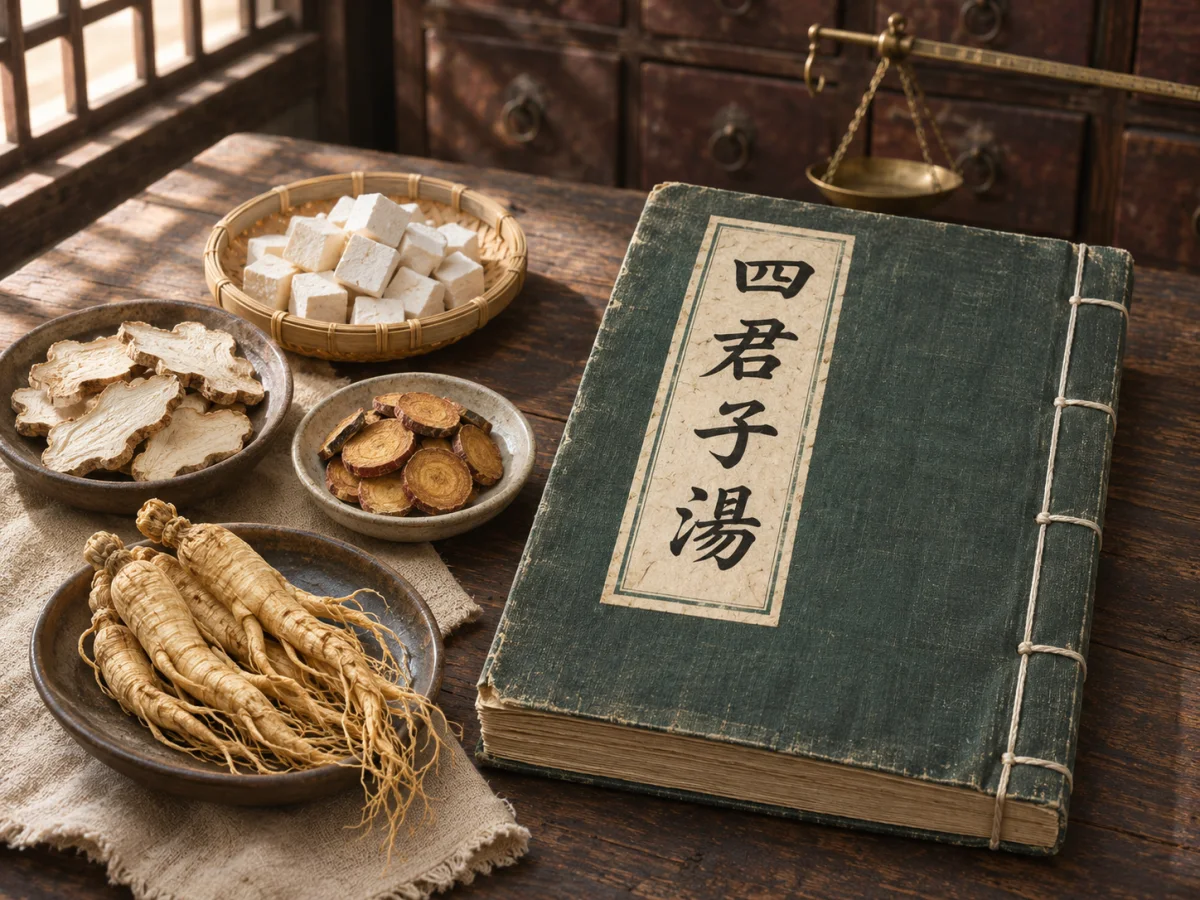
Si Jun Zi Tang: the art of combination
Explore Si Jun Zi Tang through its source, four materials and traditional ingredient roles. Distinguish the formula name from its recorded preparation forms, then compare the additional materials in Liu Jun Zi Tang.
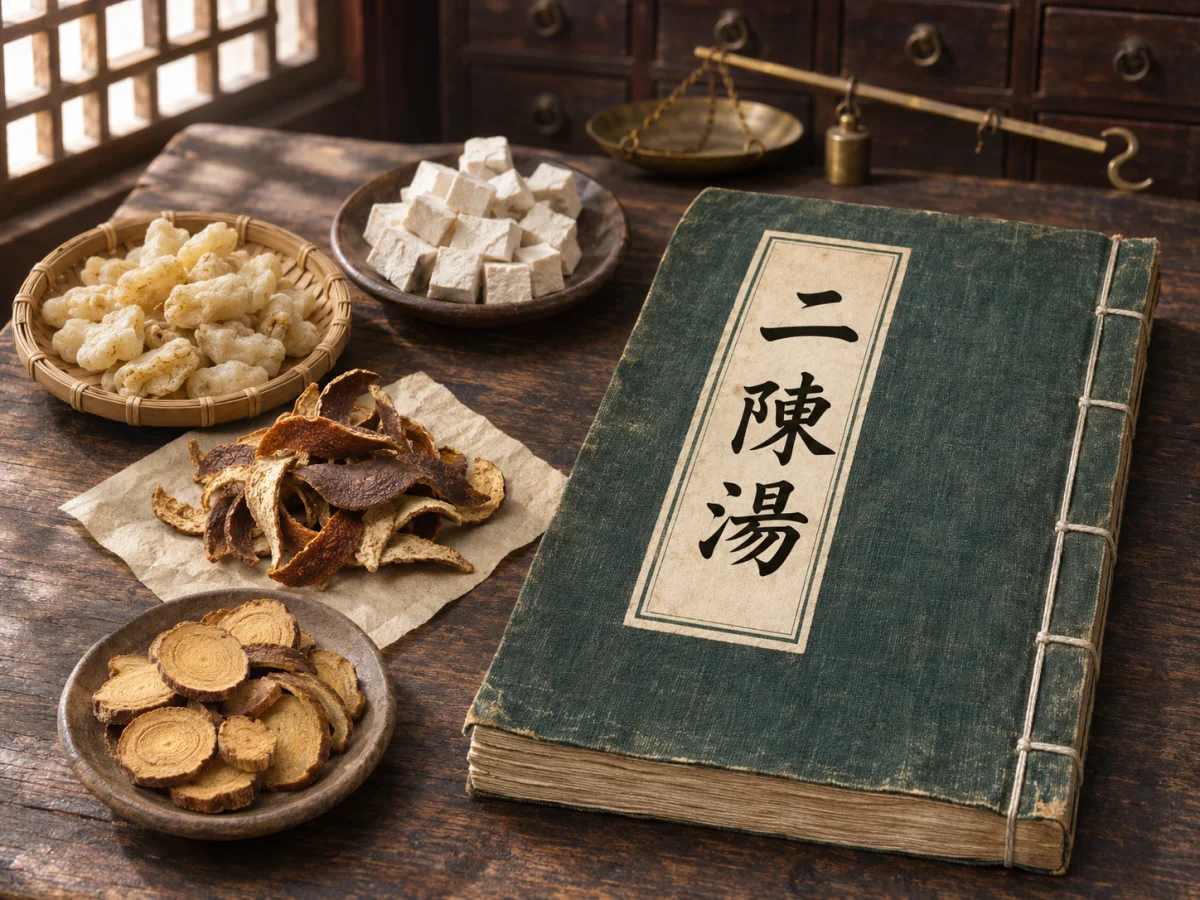
Er Chen Tang: a name, a preparation, a history
Read Er Chen Tang through its four principal herbs and separately recorded ginger and dark plum. Explore how precise material names, storage, processing and traditional formula theory give this familiar name greater depth.
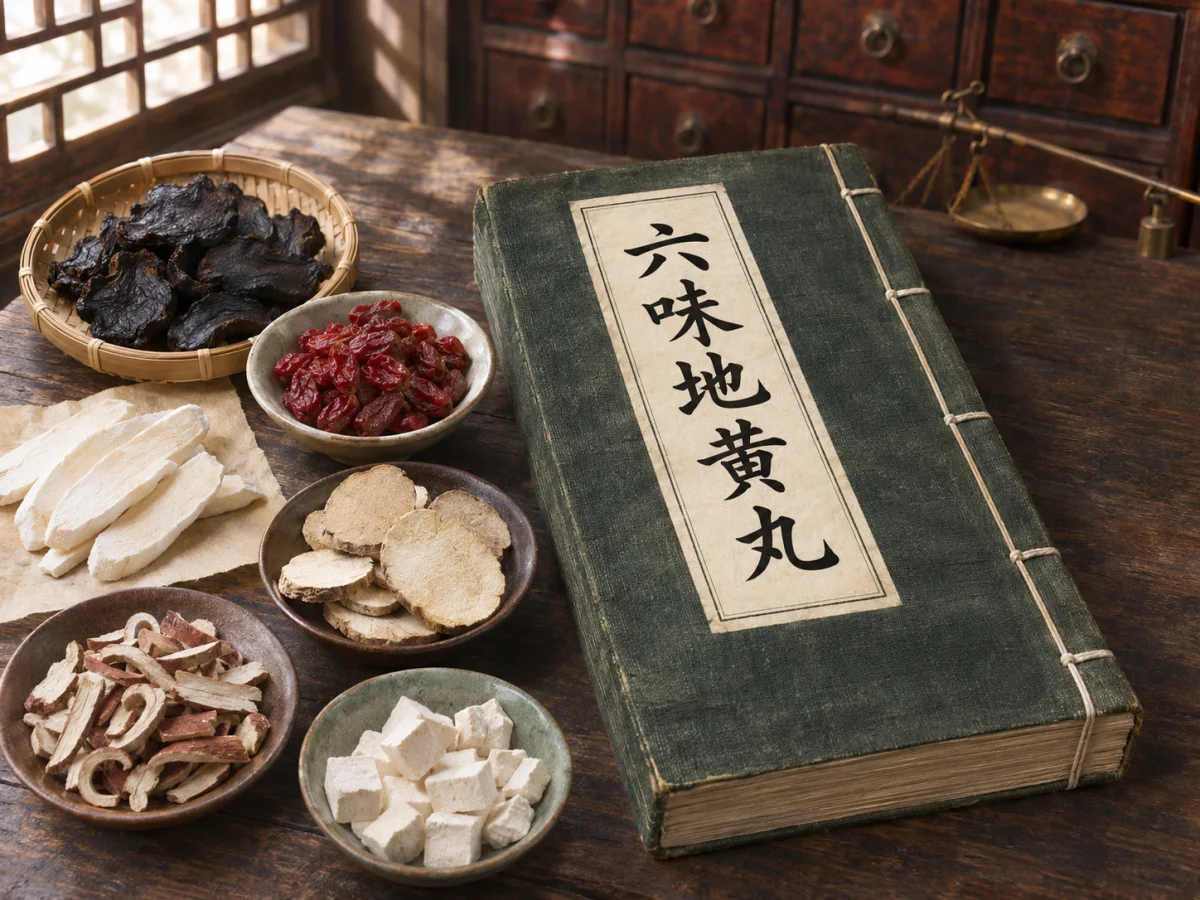
Liu Wei Di Huang Wan: reading the six-part formula
Trace Liu Wei Di Huang Wan to its cited source, then examine the six materials, traditional three-tonifying and three-draining structure, and the distinction between processing names, pill form and the recorded use of honey.