THE HERBAL ARCHIVE NO. 001
Asian ginseng
Panax ginseng C.A.Mey.
Araliaceae · root
Explore ginseng through its main root and fine rootlets, its association with the human form, and the preparation names red and white ginseng. Learn how traditional qi theory differs from modern research on ginsenosides.
6 min read

CHAPTER 01
From the main root to the rootlets
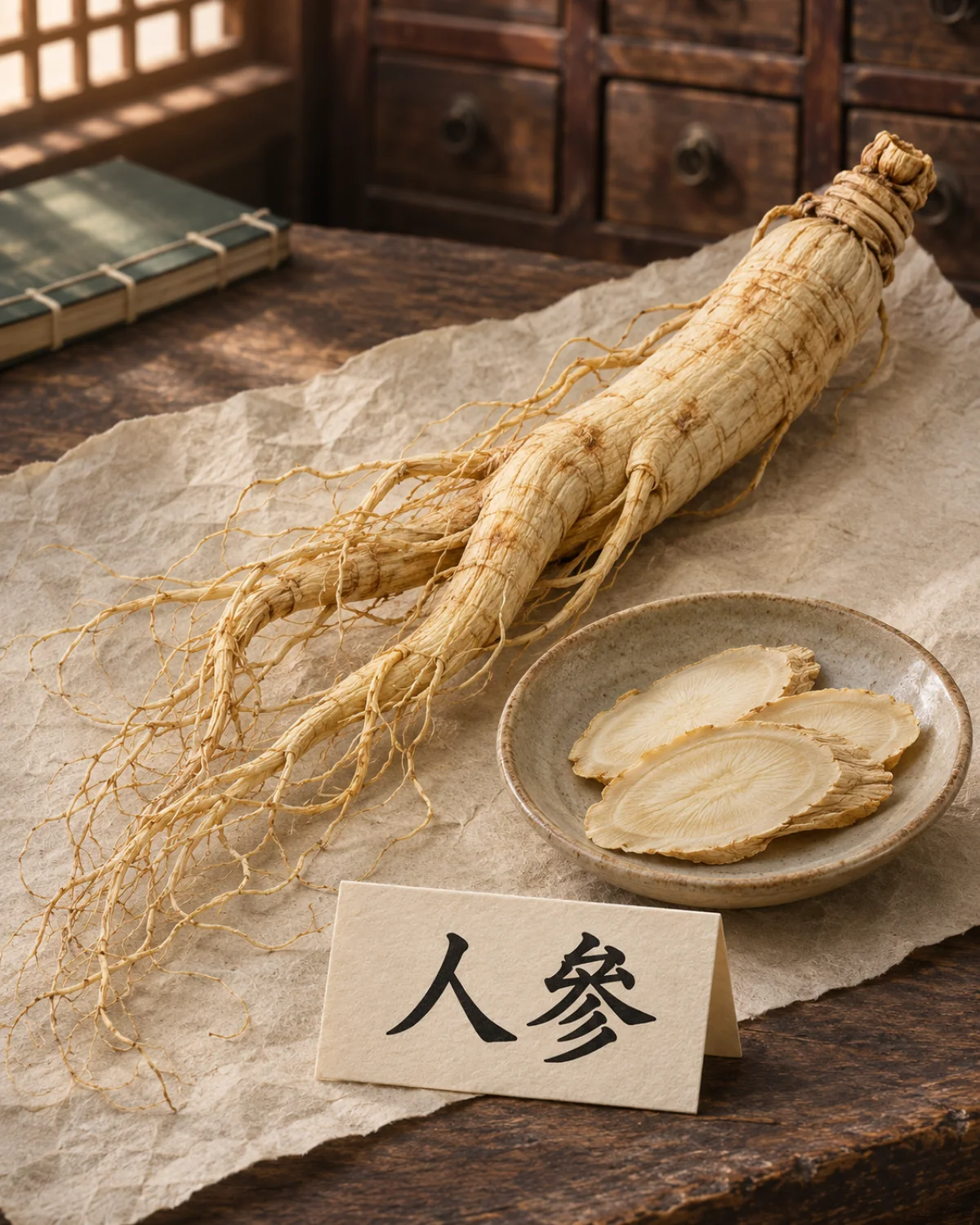
What most draws the eye in a ginseng root is often the branches and fine rootlets extending downward from the thick main root. Moving the gaze from the whole to the parts, one can distinguish the thicker root body, the lateral roots that branch off, and the fine roots extending along the ends; together they form the three-dimensional shape of the material, rather than a few symbolic lines on a flat diagram.
The ginseng referred to in this article takes Panax ginseng as the reference point for the botanical name. When reading specimens or medicinal material records, it is advisable to consider the scientific name, the part used, and the material name together: the photograph presents the appearance, the scientific name states the origin, and the root record explains which part of the plant is actually being observed. Cross-checking these three is clearer than identifying by the single character "参" alone.
CHAPTER 02
The human form in herbal culture
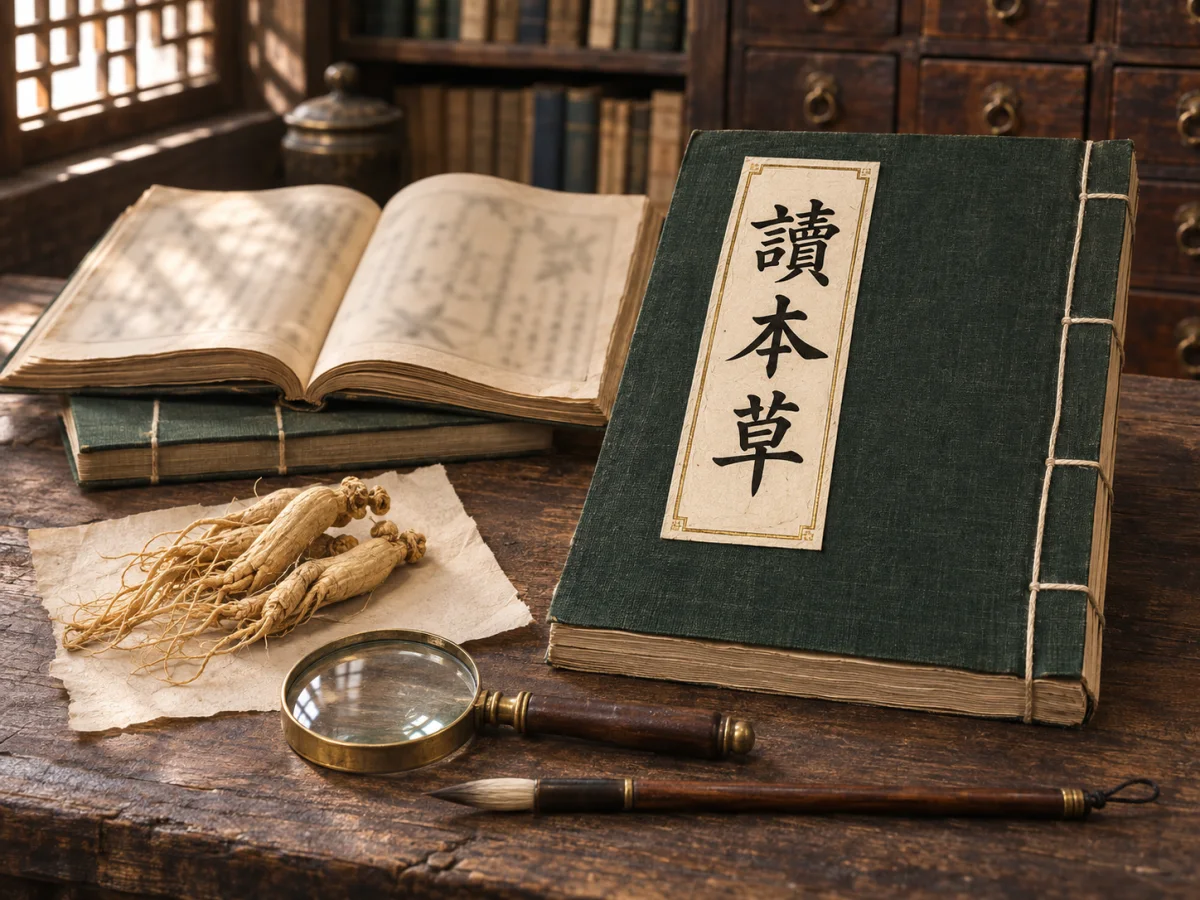
When the branches extend like limbs, the ginseng root is easily seen as a miniature human form. This visual association gives ginseng high recognizability in stories, images, and displays; viewing a complete ginseng root on the cover of an old book or on a medicinal materials workbench also conveys how people in earlier times turned everyday observation into a way to remember materials.
However, a root body resembling a human figure is only a cultural reading clue and cannot be used to judge efficacy or quality. When reading materia medica, what deserves more attention is how the author records names, describes shapes, and explains the parts used, and then compares these texts with botanical data. Stories draw people closer, while concrete records allow understanding to settle gradually onto the material itself, without needing to attach to it a discoverer who cannot be verified.
CHAPTER 03
Red and white ginseng: reading preparation names
Reading ginseng does not stop at the appearance of a whole root. Red ginseng and white ginseng both relate to different preparation methods for ginseng root; therefore, materials that likewise start from ginseng still need to state their preparation names. When color, appearance, and product name appear together, first read clearly the identity of the labeled material, so that not all ginseng roots are regarded as completely identical.
When comparing records, one may list botanical origin, root material, and preparation name separately and check item by item whether they are consistent. Ginseng in the literature, a particular prepared form, and the extract used in research are not interchangeable merely because their names are similar. This also explains why workshops need clear labels and records: preparation method is part of the material's history and cannot be replaced by light or dark coloration or a handsome appearance alone.
CHAPTER 04
Traditional qi theory and ginsenoside research
In traditional materia medica and formula discussions, ginseng is often discussed in the context of supplementing qi. To understand such texts, one should first remain within the theoretical context to which they belong, observing the relationship between ginseng and other materials and how the author explains compatibility; it is not appropriate to translate "qi" directly into a modern physiological indicator and then add conclusions to ancient texts that were not originally there.
Modern research often mentions constituents such as ginsenosides, but the name of a constituent itself does not equal an effect in the human body. Reading research also requires looking at which prepared form the material is, who the study subjects were, and what results were observed. The U.S. NCCIH notes that many ginseng studies are small or short in duration; therefore, reading material records, traditional explanations, and research conditions separately preserves the original meaning of each layer of information.
INGREDIENTS
Constituents & parts
This article focuses on the root material of Panax ginseng, observing the relationship between the main root, branches, and fine roots, and comparing the preparation names of red ginseng and white ginseng. Ginsenosides are a commonly studied class of constituents; the name or content of a constituent alone cannot be used to infer the effects of an individual product.
HISTORY
Origins & stories
The branching of ginseng roots readily evokes a human form and has given ginseng a vivid image in materia medica culture. When reading related stories, one may separate morphological metaphor from verifiable botanical origin, then follow names, material parts, and preparation records to understand how ginseng entered the context of traditional medicinal use.
SAFETY
Reading & safety notes
Ginseng may interact with medications. Those who are taking medication, are pregnant or breastfeeding, or are selecting it for a child should first confirm with a doctor or pharmacist, and should not add it on their own under the name of tonic supplementation.
THE READING ROOM
References
- 香港中藥材標準 / Hong Kong Chinese Materia Medica Standards ↗
- NCCIH — Herb–Drug Interactions ↗
- NCCIH — Asian Ginseng ↗
- 香港衞生署 · 香港中藥材標準:人參 ↗
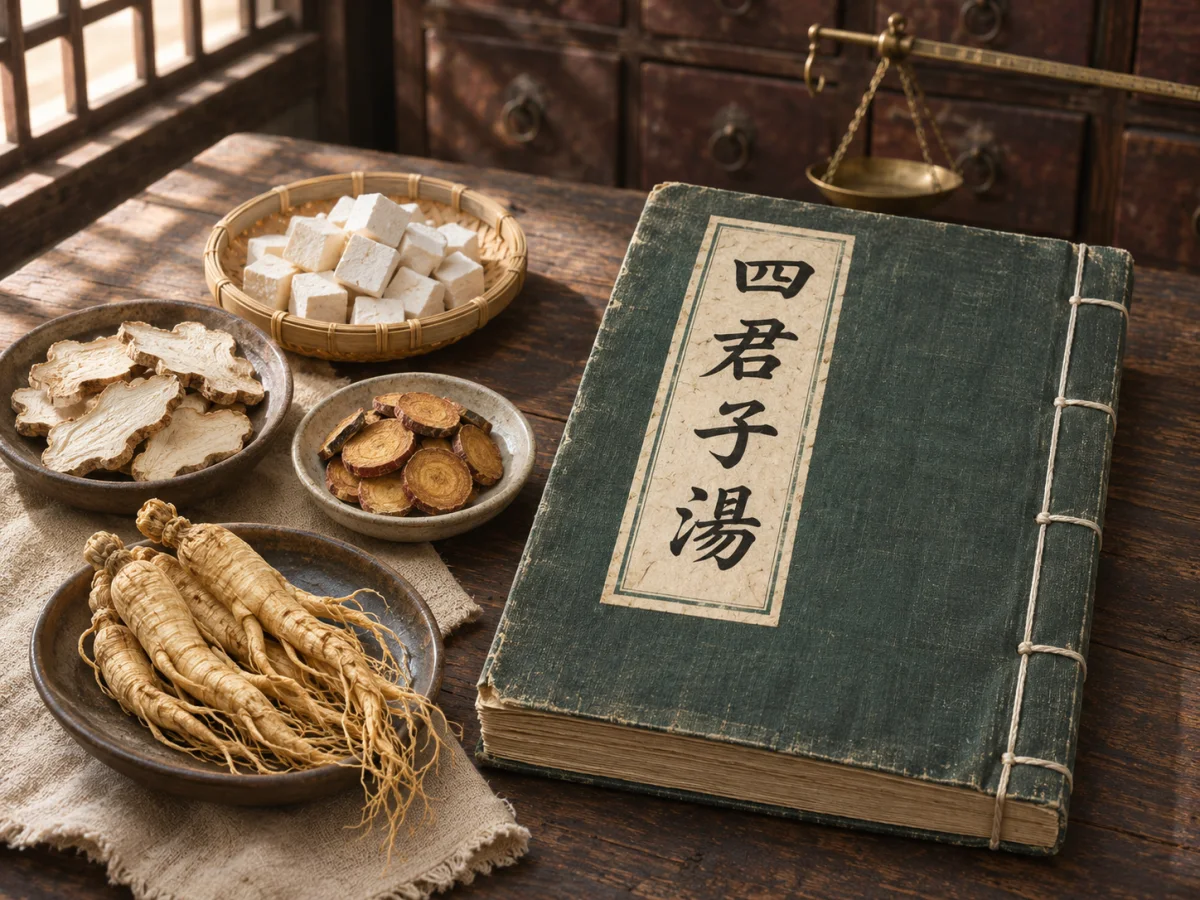
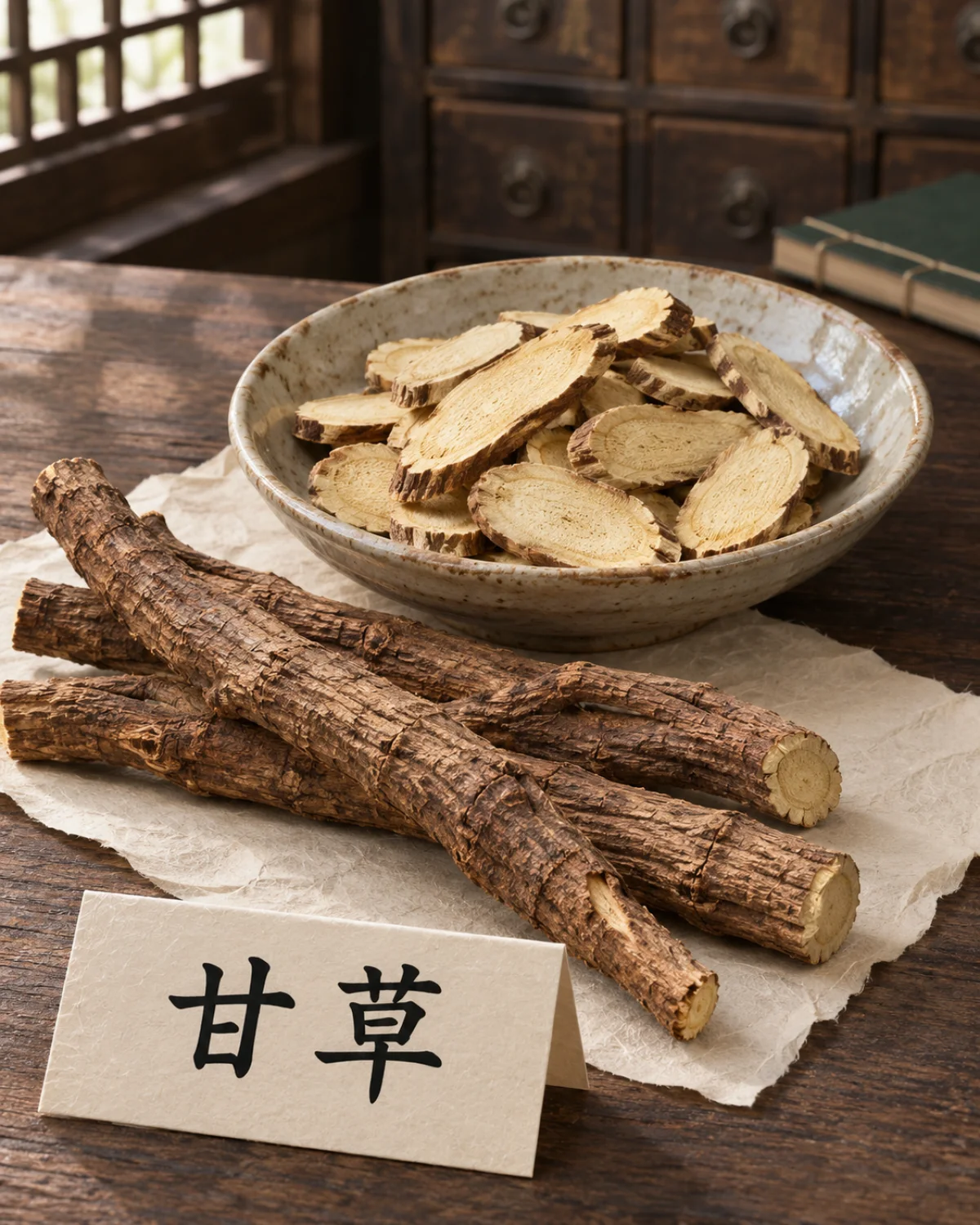
Herbal workshop scene; not a historical artifact, identification plate or record of brand manufacturing.
Editorial update · 2026-11-16