
THE FORMULA JOURNAL NO. 007
Si Jun Zi Tang: the art of combination
Explore Si Jun Zi Tang through its source, four materials and traditional ingredient roles. Distinguish the formula name from its recorded preparation forms, then compare the additional materials in Liu Jun Zi Tang.
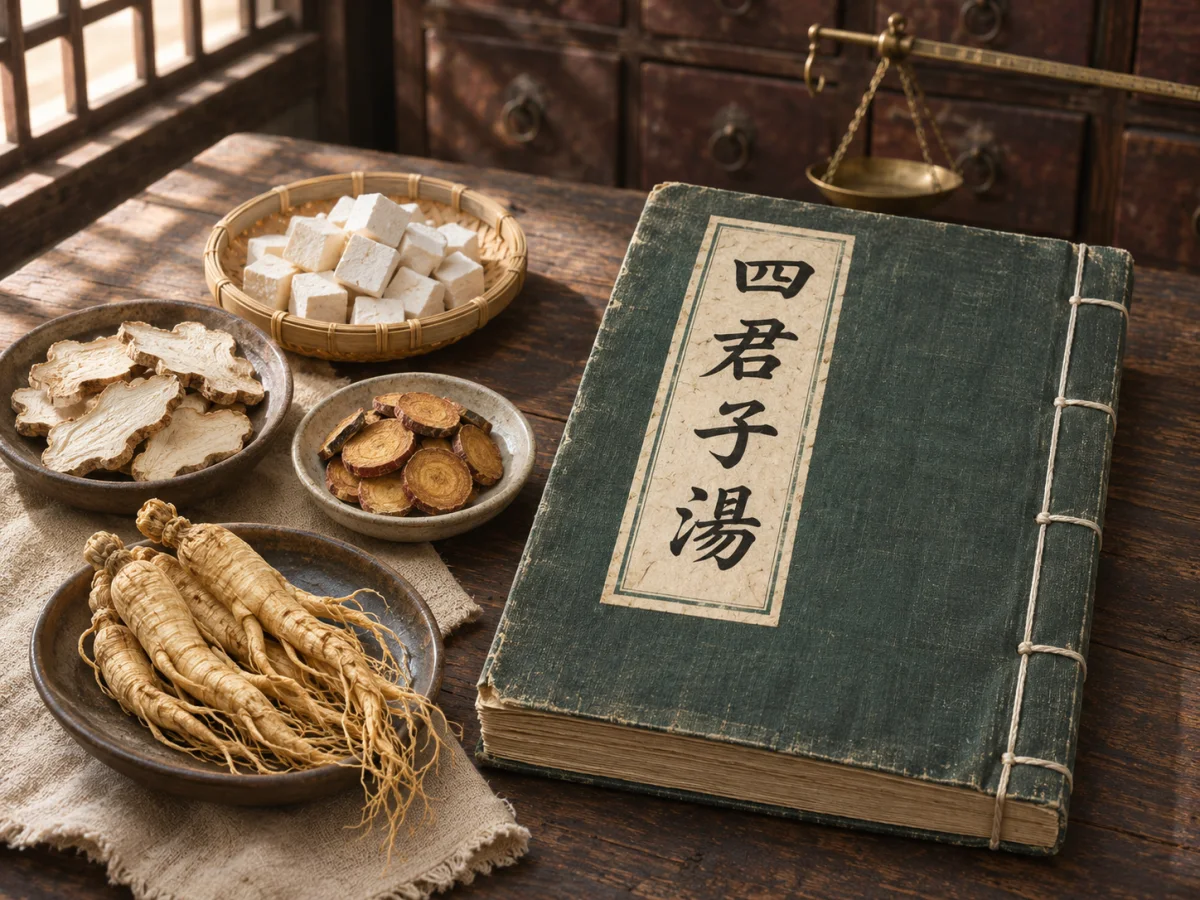
CHAPTER 01
Find the source first, then read "Si Jun Zi"
"Si" draws attention to the number of medicinal materials, while "jun zi" brings cultural associations. What truly deserves close reading is how the four materials take their places within one formula. Moving from book title to entry, and then to materials, preserves the cultural atmosphere of the ancient formula while grounding the reading in specific text.
CHAPTER 02
The four materials differ; combination gives depth
The formula discussion takes ren shen as jun, bai zhu as chen, fu ling as zuo and zhi gan cao as shi, explaining the arrangement of the four within the whole. Jun-chen-zuo-shi is a traditional language of combination; its focus is the relationships among materials, not the item-by-item addition of research results on individual components. Only after identifying the four materials and then reading their roles can one see that a small formula has a carefully organized structure.
CHAPTER 03
The "tang" in the name and the preparation form in the record
Removing the root crown, peeling and zhi processing are text at the material level; powder and decoction for taking belong to another layer of record. Marking them separately while reading brings one closer to the appearance of the original entry than remembering only the formula name. The transmission of ancient formulas also includes the processes by which such details were preserved, organized and understood anew. Understanding the layers of the record does not require turning ancient texts into a dispensing procedure to be followed.
CHAPTER 04
Why two more materials deserve a separate page
Study notes can preserve the source, original name and place of added materials for both formulas, and separately record the traditional formula discussions used in each entry. In this way each formula retains its own identity and does not share one introduction merely because the names are similar. Si Jun Zi Tang is suitable as an entry point for reading precisely because its composition is concise, yet it links source, materials, preparation form and derivation together.
THE LINEAGE
Sources & transmission
Source record
Taiping Huimin Heji Jufang
Later variants
Later books record modified combinations; each version deserves its own reading.
Reading today
Read the record alongside material standards and safety information.
THE ART OF PREPARATION
A process, illustrated
An educational workflow. Images are conceptual, not records of Chap Ku Fong facilities or completed product development.
Read the recorded source
Beside the formula name, note Taiping Huimin Heji Jufang and the database entry to establish bibliographic coordinates first. Then read composition, usage and formula meaning in separate columns, so that each later observation can return to the corresponding text rather than leaving only a general formula name.
Identify the four materials
List ren shen, bai zhu, fu ling and zhi gan cao in full, preserving notes such as removing the root crown and peeling. Accompanying images help understand the different forms of the materials; processing words in the names should still be read item by item against the textual record.
Study the combination as a whole
Place the jun, chen, zuo and shi arrangement alongside the four materials to see how the roles constitute the whole. Notes should focus on relationships among materials and keep this traditional explanation separate from modern component research, avoiding direct addition of statements from different levels.
Record versions and materials
Open a separate column to record chen pi and ban xia added in Liu Jun Zi Tang, preserving the respective sources of the two formulas. Keep material names, processing notes and formula discussions in separate records, so that on later rereading one can tell from which record each comparison comes.
INGREDIENTS
Constituents & parts
HISTORY
Origins & stories
SAFETY
Reading & safety notes
THE READING ROOM
References
Herbal workshop scene; not a historical artifact, identification plate or record of brand manufacturing.
Editorial update · 2026-11-16
ANOTHER CHAPTER AWAITS
Continue exploring
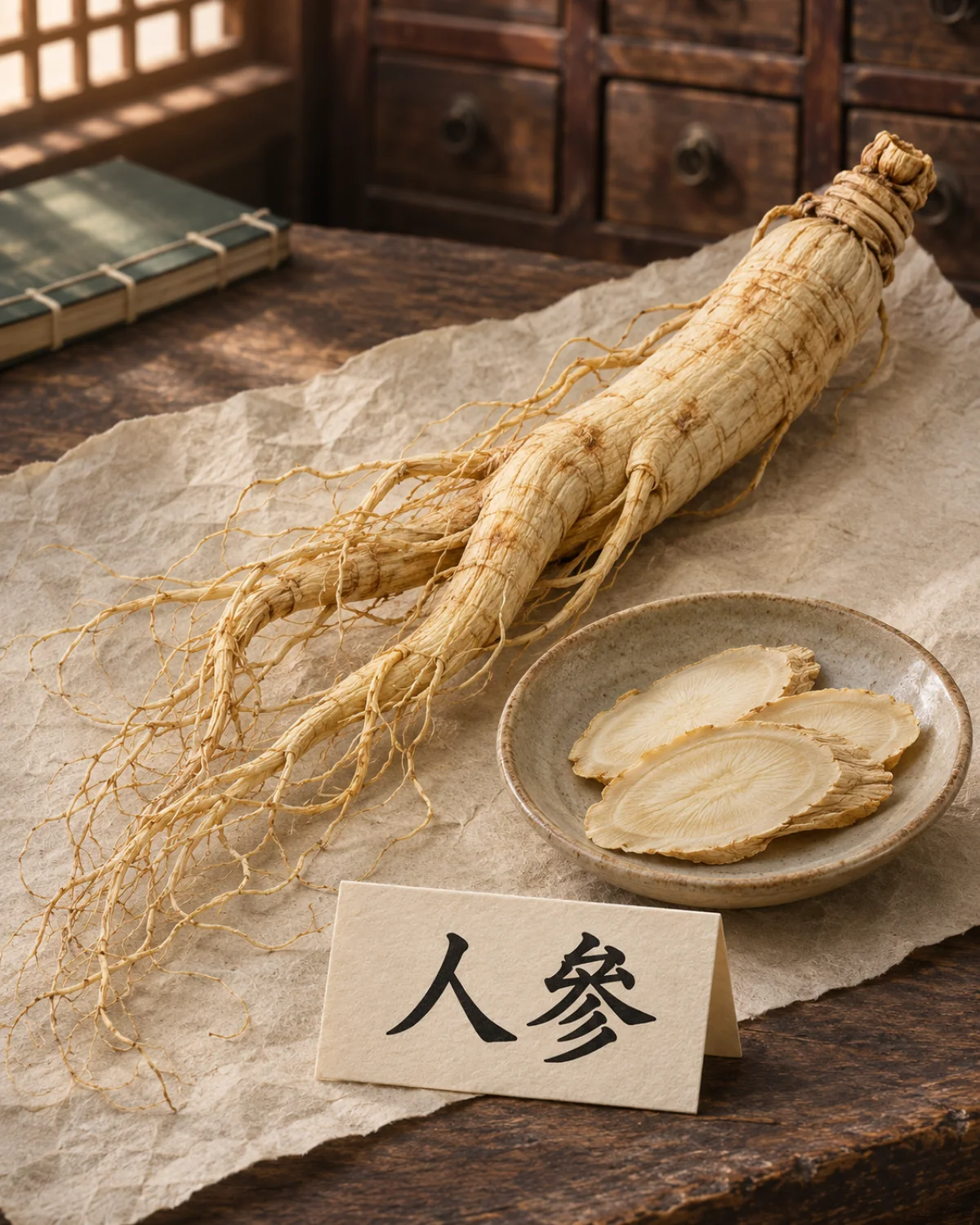 HERBARIUM · Panax ginseng C.A.Mey.
Asian ginseng
Explore ginseng through its main root and fine rootlets, its association with the human form, and the preparation names red and white ginseng. Learn how traditional qi theory differs from modern research on ginsenosides.
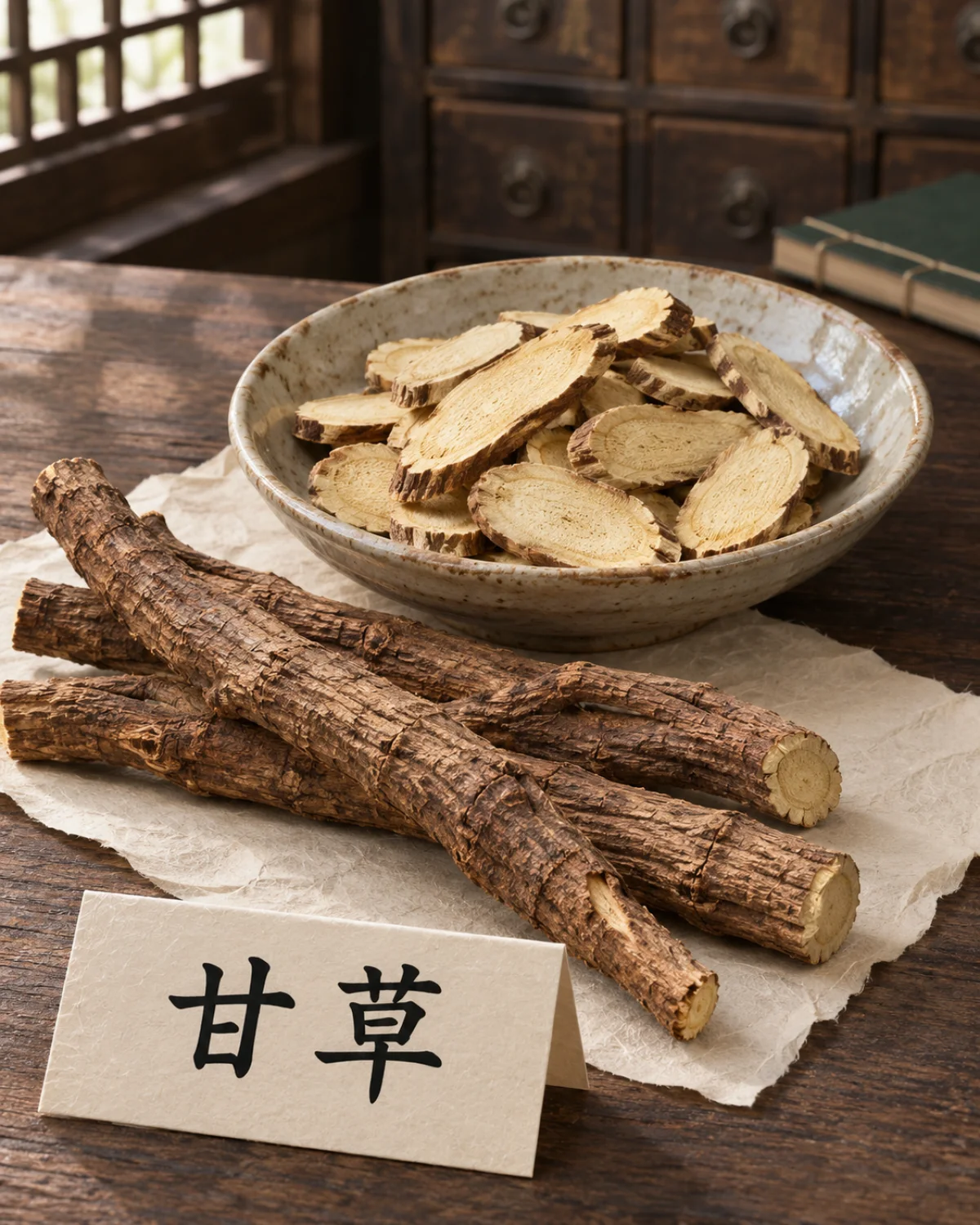 HERBARIUM · Glycyrrhiza uralensis Fisch. et al.
Licorice root
Look beyond sweetness to licorice roots and rhizomes, the chrysanthemum-heart pattern of a cut surface, and preparation names. Explore traditional ideas of harmonising within formulas alongside the safety information associated with glycyrrhizic acid.
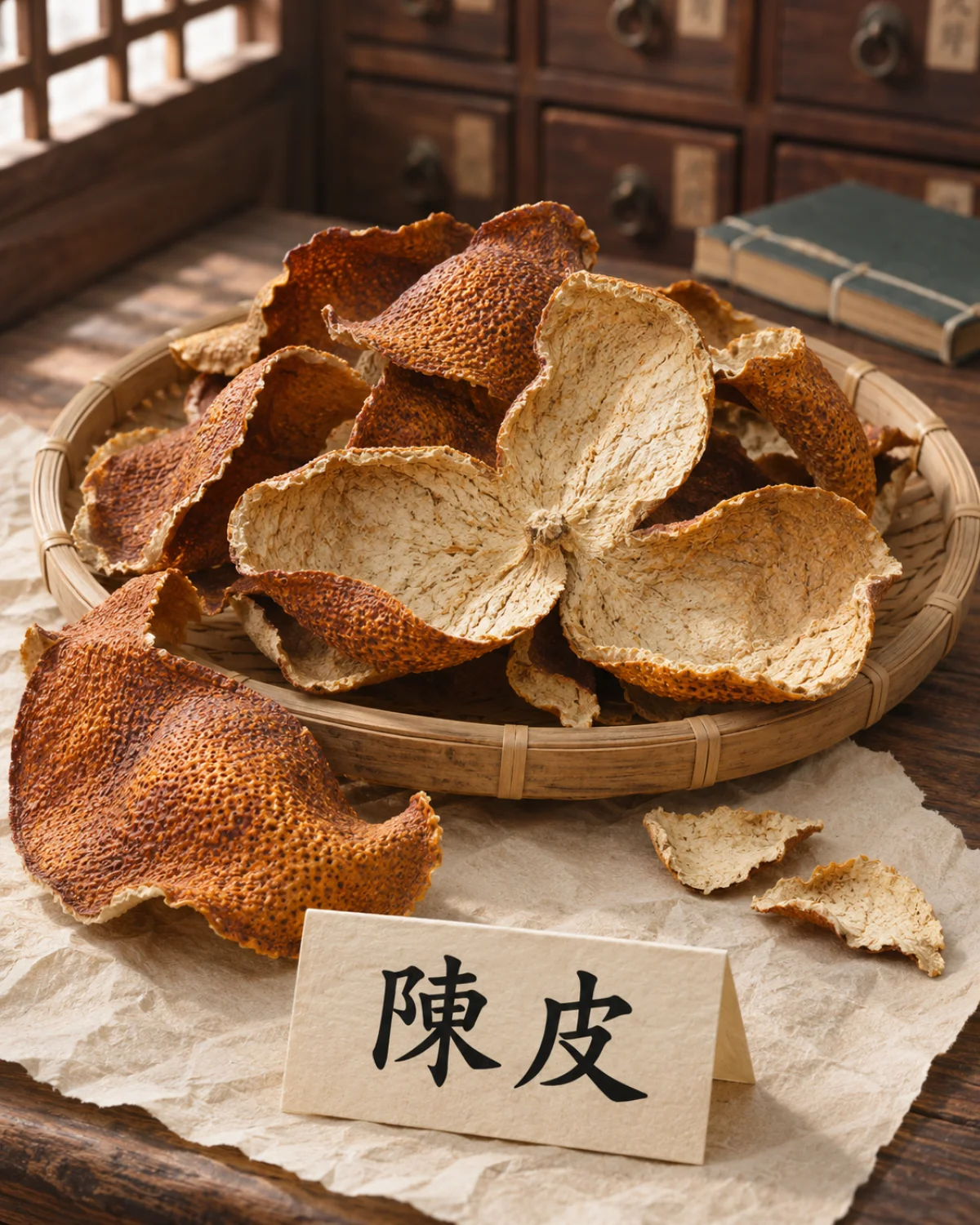 HERBARIUM · Citrus reticulata Blanco
Dried tangerine peel
Examine the oil cavities, inner fibres and mature peel that define Chenpi. Follow the meaning of its name, associated with ageing, while distinguishing storage records, sensory impressions, constituent analysis and the evidence needed to assess quality.